
I'm from the United States. Soy estadounidense. In the United States, people often call themselves "American." Here I write to other Estadounidenses, and Americans in general, about things that every American should know about Venezuela. As a biased American with a sincere belief in free market economics, I can't help but interpret some of these facts through my own lens. I will try to stay close to the facts for this article but I can't help but make a conclusion based on my own priors.
Venezuela is substantial
First let's prove to Americans (estadounidenses) that Venezuela is substantial enough to spend time knowing things about it. A good way for Americans to understand size is to compare with Texas. "Everything is bigger in Texas." Texas is the largest state by area in "the lower 48" and the second largest state by population and economic activity. Texas has more exports than any other state.
Venezuela is 1.4 times the size of Texas in area
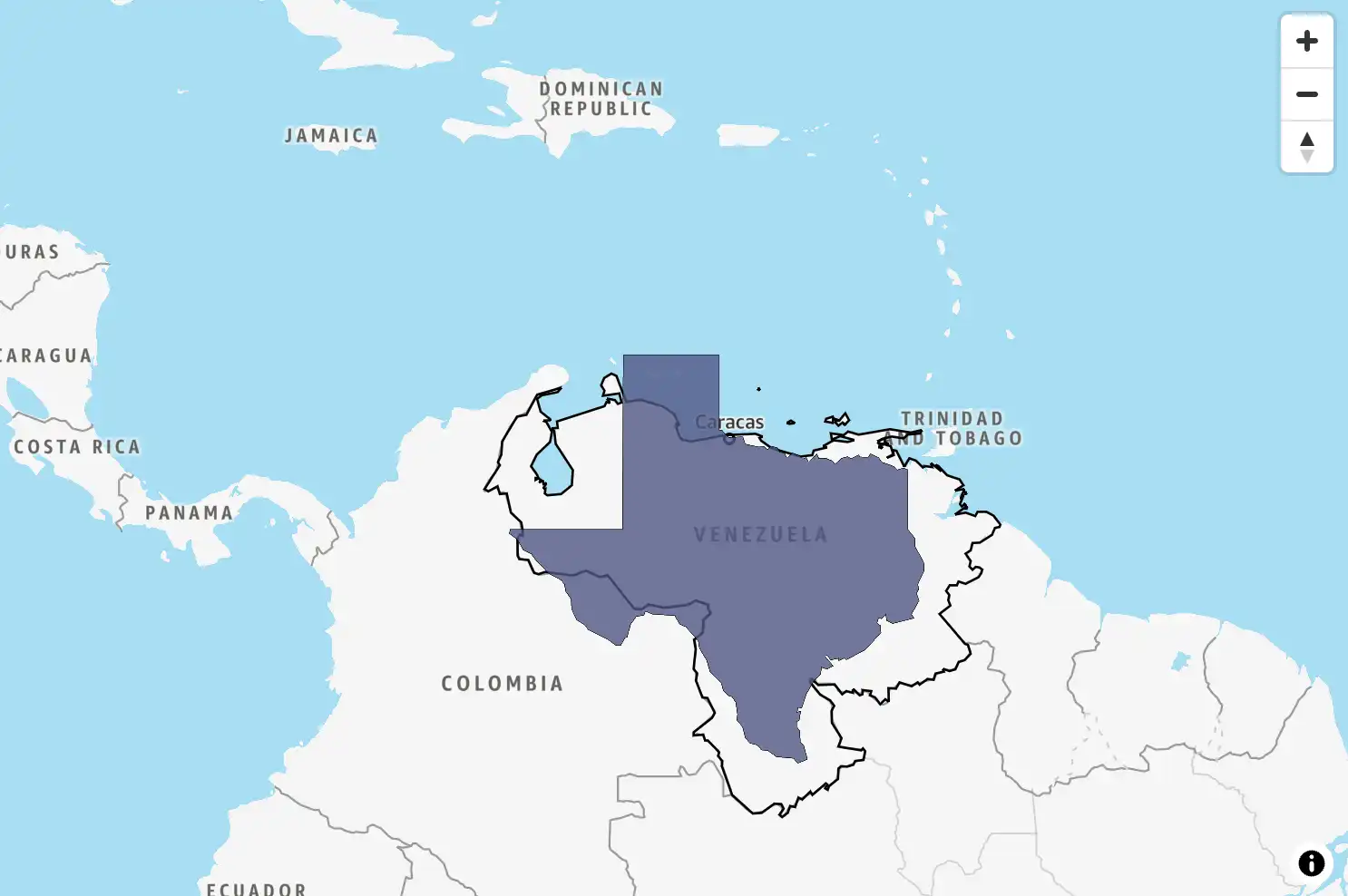
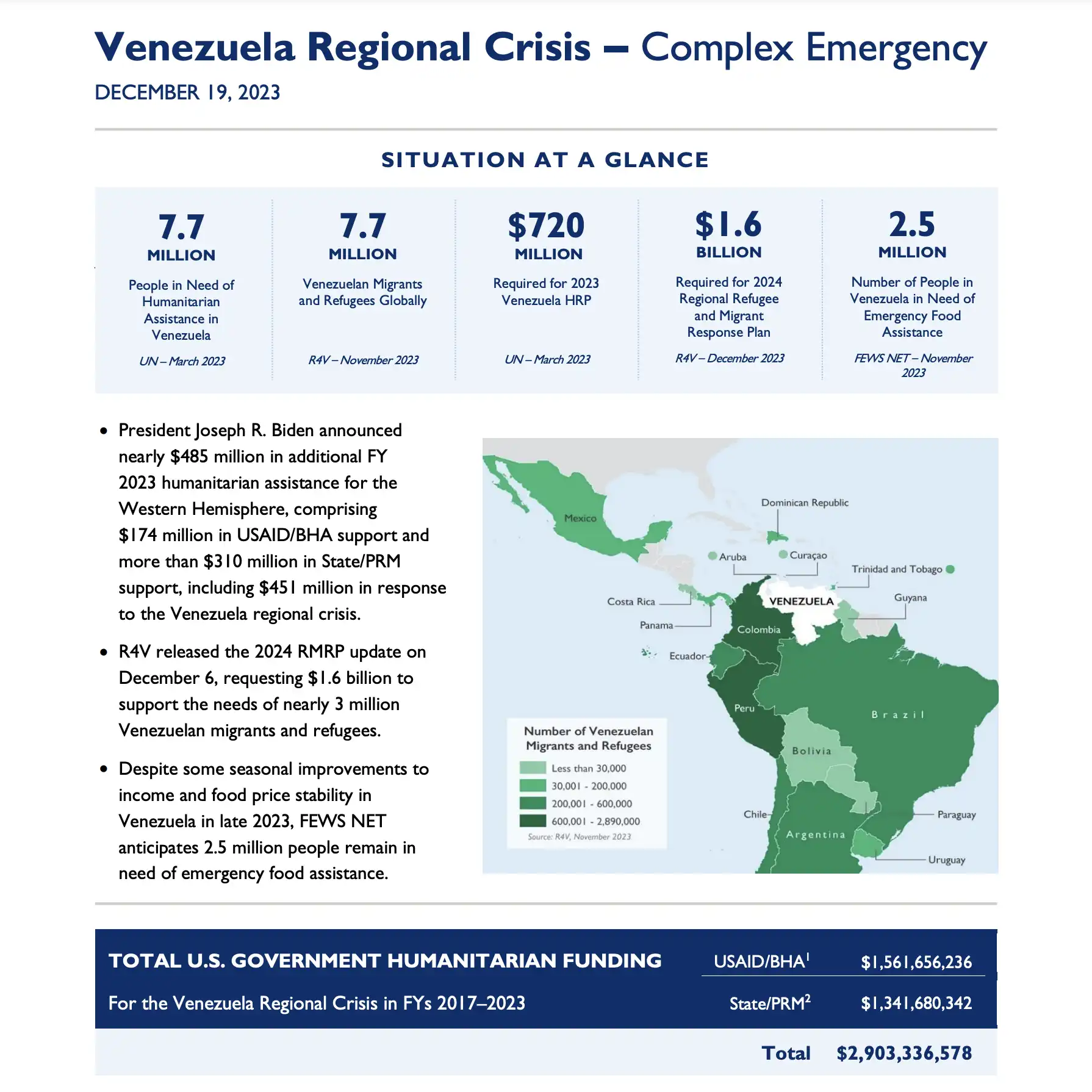
Venezuela has almost the same number of people as Texas. Many Venezuelans have left Venezuela in recent years making it hard to get accurate figures. It's estimated that 7.7 million Venezuelans have left. This exodus is considered the largest displacement crisis in the world. Still, of 54 countries in the Americas, Venezuela's population of almost 30 million, ranks .
An extremely brief history of Venezuela
Americans are sometimes caricatured as ignorant and greedy. Before we go into more numbers and economic realities, let's at least get an idea of the history of Venezuela with some of the most important turning points.
- 1498: Christopher Columbus sighted Venezuela
- 1821: Led by Simón Bolívar, Venezuela fought in the Spanish American wars of independence, becoming independent from Spain as part of Gran Colombia.
- 1830: separation from Gran Columbia
- 1914: Discovery of oil
- 1958: The Puntofijo Pact between major political parties established a framework for democratic governance, leading to decades of political stability and economic growth.
- 1976: Nationalization of the oil industry
- 1998: Election of Hugo Chávez. Chávez capitalized on widespread dissatisfaction with traditional parties and economic inequality. His victory marked the beginning of the Bolivarian Revolution, which aimed to redistribute oil wealth, increase social spending, and consolidate political power.
Oil Wealth
You can't make an overview of Venezuelan facts without mentioning oil. Venezuela has the largest oil reserves in the world. Venezuela is thought to have about 18% of the oil in the world, worth something like $21 trillion at today's prices. Between discovery in 1914 until nationalization in 1976, this massive resource was thought to help Venezuela grow faster than other economies in South America. The postwar growth of the Venezuelan economy is considered one of the most dramatic periods of growth in history. Venezuela attained 80% of the GDP per capita of the United States by 1960.
Extreme volatility and decline into crisis
Venezuela became extremely dependent on oil wealth and oil is an extremely volatile commodity. 90% of exports and 60% of government revenue became tied to oil. For an in-depth look at the economics behind this, you'll have to find some academic papers. This is a big topic.
- Diego Restuccia: The Case of Venezuela
- Luigi Bocola: Discussion of the History of Venezuela
- A Monetary and Fiscal History of Latin America
What seems clear is that Venezuela progressed to wealth in the mid 1970s and has declined since. The progression was never steady. When oil prices shot up, so did the fortunes of Venezuela. When oil prices plummeted, so did the fortunes of Venezuela.
The Venezuelan Crisis
The BBC published a very short overview of the last 20 years in Venezuela with a bit of detail on more recent developments. These types of briefs fail to make the crisis tangible for most people around the world and feel like a list of dates and transactions. Even the first few paragraphs of the Wikipedia article do a better job of emphasizing the magnitude of the crisis.
Some statistics to think about:
- (2024) The minimum wage, which has been set at 130 bolivars per month since March 2022, is now equivalent to $3.60 per month, according to the official exchange rate.
- (2023) Monthly private sector pay averages $139 and public sector salaries are around $14 per month, according to the Venezuelan Observatory of Finances
The Venezuelan Crisis and Immigration
From the perspective of an Estadounidense, we may not have brought home the importance of Venezuela to the United States yet. Sure, Venezuela is bigger than Texas, has more oil than Saudi Arabia, has been extremely volatile, experienced growth and wealth about 50 years ago and now has fallen into crisis with shortages, hunger, and poverty. The Venezuelan crisis is probably the largest refugee crisis in the world today and perhaps the largest ever in the Western Hemisphere. But, there are lots of things to worry about, people starving all over the world. Is there anything else that the United States should know about Venezuela today?
In the month of September 2023, 54,833 Venezuelans were apprehended crossing the US border without authorization. This is out of a total of 219,000 apprehensions for that month. So, we can surmise that Venezuelans represent about 25% of recent Border Patrol encounters.
Of the some 7 million people who have left Venezuela, it seems likely that more than 500,000 have so far entered the United States.
The Biden administration announced in early October it had reached a deportation agreement with the Venezuelan government, a U.S.-sanctioned regime that had long refused to accept the return of its citizens. Officials at the time vowed to deport those found to be ineligible for asylum or a temporary legal status the Biden administration offered to 472,000 Venezuelans who arrived before July 31.
The US government has spent about $2.9 billion on the crisis since 2017, just in foreign aid.
Real Solutions
Every Venezuelan moving to Texas isn't going to be a solution, and charity, while noble and necessary in immediate crises, will not solve the problems at their source. Charity can only treat symptoms. The true path to recovery and prosperity for Venezuela lies in addressing the root causes of its economic and social challenges. This involves embracing economic diversification, fostering entrepreneurship, and leveraging the global digital economy.
Economic Diversification
For decades, Venezuela's economy has been overwhelmingly dependent on oil, a commodity subject to volatile price swings on the international market. This single-source reliance has made the country's economic health too dependent on external factors, leading to the severe financial instability we witness today. Real solutions must focus on diversifying Venezuela's economy, exploring sectors such as agriculture, manufacturing, technology, and tourism. By broadening its economic base, Venezuela can create a more stable and resilient economy, less susceptible to global oil price fluctuations.
Fostering Entrepreneurship
The spirit of entrepreneurship must be nurtured as a cornerstone of Venezuela's economic revival. Entrepreneurs drive innovation, create jobs, and can rapidly adapt to changing market needs. However, for entrepreneurship to flourish, it is crucial to establish a supportive ecosystem. This includes ensuring access to capital, providing business mentorship and training, and simplifying regulatory frameworks to encourage the formation and growth of new businesses. By empowering individual entrepreneurs and small businesses, Venezuela can ignite a powerful engine of economic growth and development.
Leveraging the Global Digital Economy
In the 21st century, the digital economy offers unprecedented opportunities for growth and global integration. For Venezuela, investing in digital infrastructure and skills training can open vast new avenues for economic participation. The global demand for digital services — from software development to digital marketing and beyond — provides a platform for Venezuelan talent to shine on the world stage. Engaging with the digital economy can provide immediate income opportunities while also laying the groundwork for long-term economic stability and growth.
Conclusion
In the face of Venezuela's economic challenges, there lies a transformative opportunity within the realm of knowledge work. The digital economy, with its vast and borderless marketplace, presents an unprecedented chance for Venezuelan talent to connect with global demand for digital services. This sector, encompassing everything from software development to graphic design and more, offers a pathway to economic diversification and stability that can transcend the limitations of traditional industries.
The essence of this opportunity lies in empowering Venezuelan individuals—talented, skilled, and ready to contribute to the global knowledge economy. Each knowledge worker, through their engagement with international clients and projects, has the potential to become a cornerstone of economic support not only for themselves but also for their local communities. The ripple effect of their success can be profound: with access to foreign exchange earnings, a single knowledge worker can sustain and invigorate local economies, supporting dozens or even hundreds of others through the circulation of wealth.
This vision champions individual empowerment over reliance on government interventions. It is grounded in the belief that economic recovery and growth stem from unleashing the entrepreneurial spirit and the innovative capabilities of individuals. By fostering an environment where Venezuelan knowledge workers can freely engage with the global market, we can catalyze a shift towards a more diversified and resilient economy.
In conclusion, the path to a vibrant and diverse Venezuelan economy is paved with the potential of its knowledge workers. By embracing the digital economy and fostering direct, entrepreneurial relationships across borders, Venezuela can overcome the constraints of the recent past. This approach holds the promise of a prosperous future, built on the ingenuity and resilience of the Venezuelan people. The journey ahead is challenging, yet filled with hope in the power of innovation and the indomitable human spirit.