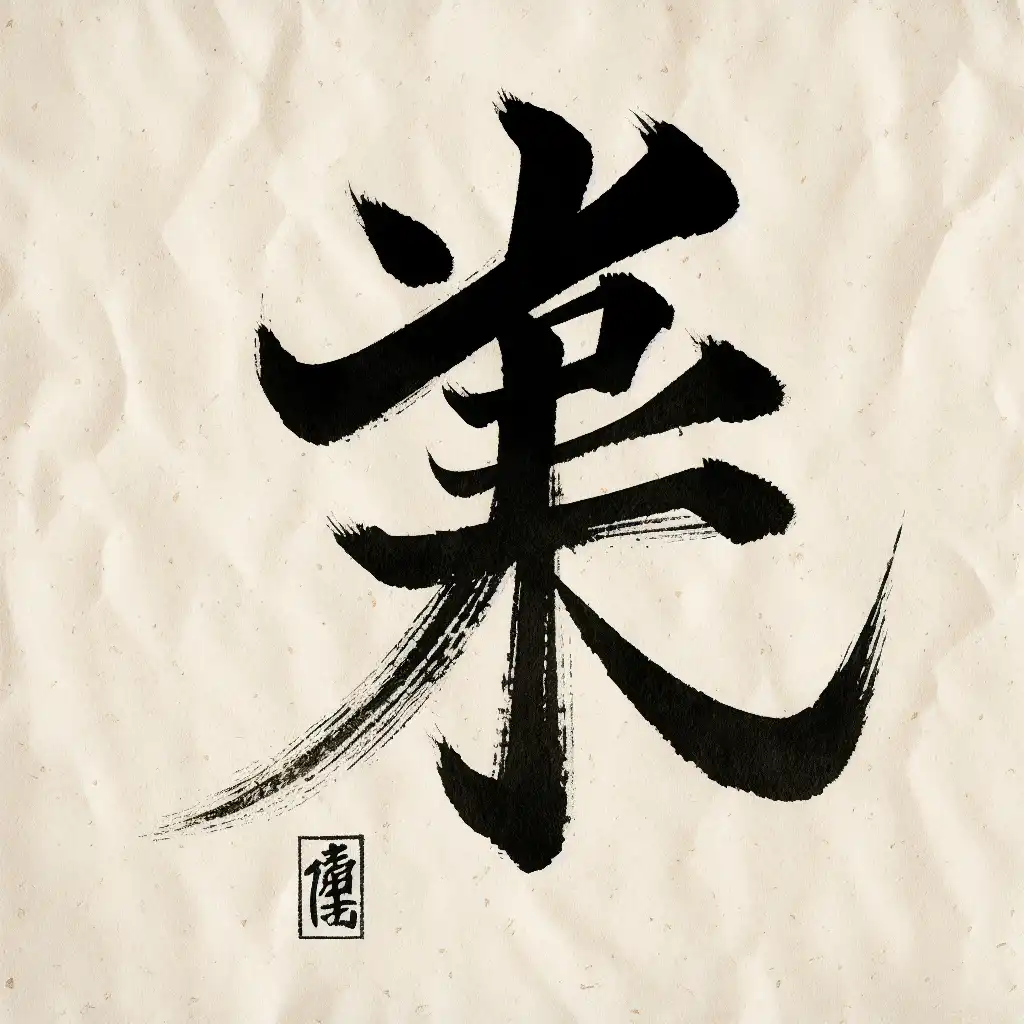
The Chinese character 亨 is a fascinating study in linguistic evolution—a term that bridges the tangible world of ritual sacrifice and the abstract realm of divination and moral philosophy. In this post, we explore its ancient origins, ritualistic connotations, semantic transformation through the Zhou and Han eras, and the modern scholarship that has revised early interpretations such as Richard Wilhelm’s 1924 reading.
1. Ancient Origins: Oracle Bones and Bronze Inscriptions
1.1 Early Script and Etymology
Oracle Bone Script & Bronze Inscriptions:
In the Shang dynasty (c. 1200–1050 BCE), early forms of 亨 appeared in oracle bone and bronze inscriptions. Scholars note that these forms are closely linked to characters like 享 (to offer) and 烹 (to cook), suggesting that they were once variants of a single concept.Etymological Roots:
The pictographic evidence implies that 亨 originally referred to the act of cooking or preparing an offering. Some scholars have proposed that the graphic elements evoke images of a cooking pit or a vessel, hinting at a ritual context where food is prepared and then offered.
1.2 Ritualistic Connotations in Shang and Zhou
Ritual Sacrifice:
During the Shang period, the process of making offerings was central to divination and ancestor worship. The act of cooking (亨/烹) an animal in a bronze 鼎 (tripod cauldron) was not merely culinary—it was a sacred preparation, meant to appease the spirits.From Cooking to Offering:
In this ritual sequence, the prepared food was then presented (享) to the spirits. Early texts and inscriptions suggest that a successful sacrifice—where the offering was properly cooked and then offered—would secure the favor of ancestral or divine forces. Thus, 亨 initially signified that the ritual process was complete and pleasing to the gods.
2. Ritual and Semantic Development
2.1 The Sacrificial Process
Culinary Sacrifice:
In ancient rituals, the role of the cook (sometimes referred to as the 亨人) was critical. The act of cooking in the 鼎 was understood as preparing the offering, ensuring that it met the necessary ritual standards before being presented.Ritual Completion:
Once the cooking was done, the offering was accepted by the spiritual realm—a process sometimes glossed in texts as 饗 (xiǎng), meaning “to feast or enjoy.” The acceptance of the offering was seen as the divine endorsement of the sacrifice, a turning point that guaranteed prosperity and harmony.
2.2 Transition from the Literal to the Metaphorical
From Sacrifice to Success:
Over time, as the overt ritualistic practices receded into the background, the term 亨 evolved. The early concrete meaning—“the offering is cooked and accepted”—gradually abstracted into a broader concept of “success” or “smooth progress.”Confucian and Daoist Interpretations:
During the later Zhou and into the Han dynasty, scholars began to interpret the term in more metaphorical terms. In the context of the Zhou Yi (I Ching), 亨 came to be seen as a marker of favorable divine communication, a signal that one’s actions were in harmony with cosmic forces.
3. The Evolution from Zhou to Han
3.1 Changes in Linguistic Standardization
Shuōwén Jiězì and the Merging of Concepts:
By the Han dynasty, lexicographers like Xu Shen merged the meanings of 亨, 享, and 烹 under a single umbrella. In these dictionaries, the emphasis shifted from the act of cooking to the broader concept of offering, which by then had taken on the sense of “divine favor” and “prosperity.”Philosophical Reinterpretation:
The ritual sense of 亨 was reinterpreted by Confucian scholars as indicative of social and cosmic harmony. Texts such as the Ten Wings offered moral readings that emphasized virtues like constancy, harmonious progress, and the smooth unfolding of destiny.
3.2 The Ritual Lost in Abstraction
From Concrete to Abstract:
As the centuries passed, the concrete image of cooking an offering was largely forgotten by the broader populace, even as the term continued to imply that things “went smoothly” or were “prosperous.” By the Tang and Song dynasties, 亨 was firmly entrenched in idiomatic expressions such as 亨通 (smooth progress) and 亨亨 (prosperity).Wilhelm’s 1924 Interpretation:
Early 20th-century sinologists like Richard Wilhelm, working from Han commentaries, rendered 亨 as “success” or “sublime success.” Although influential, this reading was based on an interpretation that had already long detached the term from its ritual roots.
4. Modern Discoveries and Revised Understandings
4.1 Archaeological Breakthroughs
Mawangdui and Bamboo Strips:
The discovery of the Mawangdui silk manuscripts in the 1970s, along with bamboo strips from Fuyang and Guodian, provided fresh evidence of the early Zhou Yi texts. These discoveries revealed variant forms of 亨 (or its old form 亯), suggesting a strong link to ritual offerings.Substitutions and Variant Readings:
In some texts, the character 芳 (“fragrant”) appears in places where 亨 is expected, hinting at the sensory experience of an offering (the aroma of cooked food) that was integral to its ritual success.
4.2 Revisiting Wilhelm’s Legacy
Modern Sinology's Shift:
Post-1970s scholarship has revisited the early meaning of 亨 with a more nuanced approach. Researchers now emphasize that the term originally signified the successful completion of a ritual offering—cooking, presenting, and receiving favor from the divine.A New Translation Paradigm:
Instead of simply rendering 亨 as “success,” modern translators propose alternatives such as “fulfilled offering” or “ritual success”. These translations attempt to capture both the act of offering (cooking in the 鼎) and the resulting divine favor, thereby bridging the gap between the Zhou-era practice and later abstract readings.
5. Implications for I Ching Interpretation
5.1 Rethinking Hexagram Texts
- Hexagram 17 – Suí (Following):
In the context of the I Ching, where the phrase 元亨利貞 is pivotal, reinterpreting 亨 as “fulfilled offering” or “ritual success” brings new layers of meaning. The sequence can be seen as:- 元 (Primary): The initial, fundamental act of sacrifice.
- 亨 (Fulfilled Offering): The successful cooking and acceptance of the sacrifice.
- 利 (Advantageous): The resulting favor and benefits.
- 貞 (Divination): The verification or ongoing assurance from the spirits.
5.2 Bridging Past and Present
Restoring the Ritual Vibe:
For those seeking to align modern translations with Zhou-era intent, a term like “fulfilled” (or “offering accomplished”) not only retains the positive outcome but also hints at the deep ritualistic roots of the original text.A More Faithful Translation:
By using terms that evoke the entire sacrificial process—from cooking in the 鼎 to the reception of divine favor—modern interpretations can offer a richer, more culturally and historically informed reading of the I Ching.
Conclusion
The journey of 亨 from its origins in ritual offering to its abstract role in divination and moral philosophy reveals much about the evolution of Chinese thought. Early forms connected it directly with the physical act of cooking and offering in a sacred context, a nuance that was gradually abstracted into a broader sense of “smooth progress” or “success.” Modern archaeological discoveries have breathed new life into this ancient character, challenging long-held interpretations like Wilhelm’s and encouraging us to consider a more complex interplay of ritual, language, and divination.
Revisiting the ancient roots of 亨 not only deepens our understanding of the Zhou Yi but also enriches our broader perspective on Chinese cultural history—a history where every character tells a story of ritual, transformation, and timeless wisdom.