You are reading Day one, the second entry of this series of chronicles on Z|ECC summit. You can catch up on the previous entry here.
My day began before sunrise around 6.30 am where I headed out to exercise. It’s always better to start the day by activating both mind and body. Moreover knowing that it was going to be a long one.
Summits start with introductions. Folks from the Maya team drew the attention of the room. Everyone is very excited to hear what they have to tell us about their integration work with Zcash that they are carrying out with Hanh from Ywallet.
The introduction round was brief and Josh gave the room a warm welcome. The objectives of the Z|ECC Summit are simple: Reflect on the past months, reconnect with one another, reassess priorities and envision what will come next.
The meaning of Onwards
Zcash has been running with some sense of urgency, but that doesn’t have to sway us away from our most important mindset. We are building unstoppable private money, and the things we do are meant to last long. We are not developing some social app that will with all success last 5 or 6 years.
Onwards is the closing argument of the Cypherpunk Manifesto. Conducting ourselves with a look into the future. We are defending privacy with unstoppable private money, that’s OUR Onward.
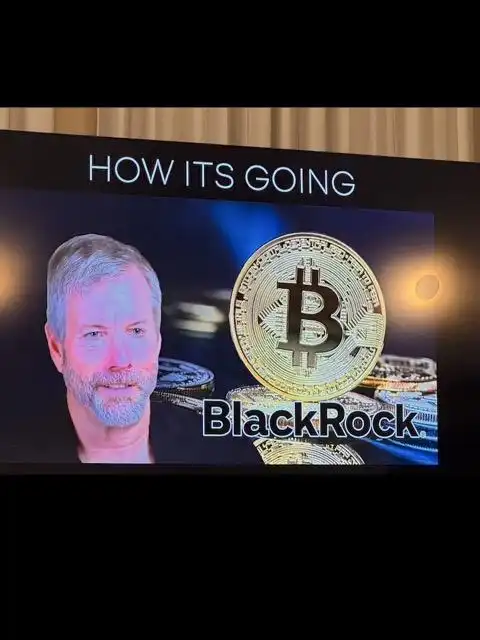
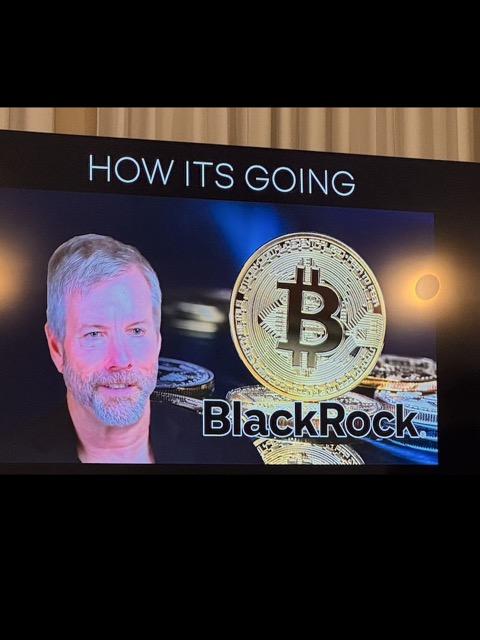
It all started with Satoshi, but we can see that its dream has been captured by the establishment. Blackrock and its foes own significant sums of BTC. Their many advocates, fake ANONs and accomplices are leading a cultural battle against sovereign custody. Bitcoin is not a tool for freedom any more. It’s an instrument for mass surveillance.
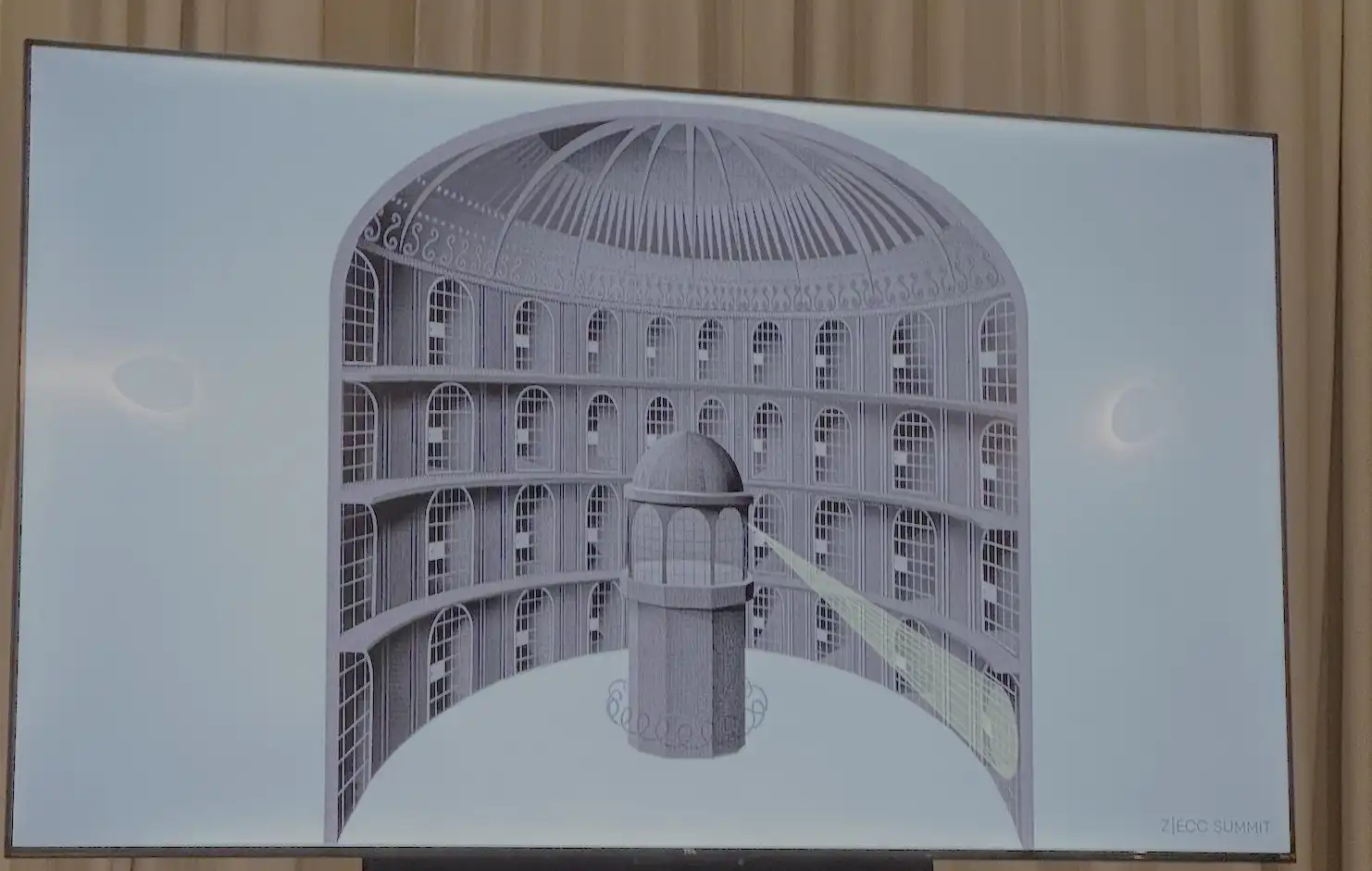
Bitcoin has become the panopticon.
Zcash is the heritage of Satoshi’s vision. For that, “we want to build for the normies, not for the cool kids”. Nodding and thumbs up all across the room. Although “we need more folks to build things with us” - someone said. An exhausted developer remarked “we can’t build everything on our own”. Which followed up a neat reflection: It’s not about tribalism.
We don’t want to impose our vision. Zcash is not about authoritarianism, neither maximalism. Zcash is about critical thinking, censorship-resistance, decentralization, privacy, expanding the barriers of knowledge and bringing the tech that comes from that expansion to everybody. Those concepts are the opposite to maximalism.
ECC has changed significantly over the past year and its noticeable. Although it is still the predominant team in the ecosystem, its culture has changed. ECC wants to “enable people”, as a way to grow the ecosystem and its user base. For that, tools need to be built so that Zcash is useful for the many people out there.
The Zcash Stack
With Zcash approximating its sunset, Zashi is the flagship product of ECC. But it can’t live on its own. It is part of a layered system. At its core, there is electronic cash enabled by a privacy-preserving core protocol (Zcash); that its enabled by a powerful UX (Zashi), on top of vertically integrated services such payment rails, swap, DEXs and Bridges), all built and maintain in partnership with community members.
That’s the vision of ECC of what the Zcash platform should be in the near future.
Zcash is for everyday and tomorrow as well.
Shielded wallets are mostly built for everyday use. Long-Term Zcash is assumed to be stored in transparent Hardware wallets or centralized exchanges. That needs to change.
“There are many dangers that we don’t see” - it was said. And that’s accurate. Regulators want to submit Zcash and other privacy coins into their surveillance regime. And we developers must make sure that Zcashers have the tools to avoid being trapped in the new panopticon. Transparent ZEC essentially is BTC, but with an escape route to shielded and greener pastures.
ECC believes that there are two faces to the same coin. A Zashi for every day and a Zashi vault for posterity, for tomorrow. While Zashi wants to remain agile, swift, quick, low-friction for everyday payments, swaps, handling expenses, organizing the monthly finances, there must be another tool to have more advanced used cases like shared custody, social recovery of keys, legacy or inheritance capabilities, coin-holder voting, staking, delegation, and much more. The things that Zcashers won’t do everyday. Those are two completely complementary but still very different experiences that will have to find their own places.
What can we expect from ECC in Q1
There’s an axiom that says “action, produces information”. ECC will be focused on taking action to release features that can produce information that they can iterate on by heavily leaning on marketing and community building. Obviously there’s a big bet on Maya and RedBridge integration and ZSAs, but also exploration on revenue sources, because ECC has gone under significant tech crunch and needs to expand its teams’ capabilities.
A new philosophy, for a new era.
Network Upgrade 7 will most likely include ZSAs and other features like memo bundles. What it will not include, is a new Zcashd version. You probably know that since I’ve been bashing your feeds with Zcashd deprecation updates ^^.
Zcashd will be deprecated by June 2025. This means that it will begin the process of shutting itself gradually, by first including messages to DevOps to turn deprecated RPC methods, special build flags that force infrastructure runners to manually intervene to launch the deprecated version of Zcashd and lastly the End-of-Life version which will stop running when NU7 is activated.
Zebra nodes will be the only Zcash nodes running NU7 consensus. And that means that Zcash Foundation will be the team responsible for maintaining the Zcash consensus node as ECC did for almost 6 years since the genesis block.
ECC will focus on being an enabler for others to step up and contribute to core development in the light of NU7 which is something to be celebrated.
We were presented with this new philosophy way of working:
- Writing Code vs Shipping code.
- ECC used to write a lot of code that was not deployed often, leading to big-bang approaches that were stressful for both the teams and ecosystem.
- Work in isolation vs work as a team
- This refers to past years were teams within ECC were working in silos and not communicating well with each other (and sometimes instructed not to)
- Individual frustration vs open communication
- DAG v Roadmap + PM
- DAGs are great to see dependencies and take on tasks, but not that great to know when they’ll be shipped. That needed to change and Andrea has lead that effort to consolidate both methodologies
- Siloed org vs cross functional collaborations.
- Release process updates
- User-driven protocol changes
- This has to do with lessons learned from NU5 where users did not have much available when Orchard was released.
Reducing the Bus factor.
Decentralization can be fuzzy to define and measure. But in practical terms it is pretty simple to assess with the help of public transportation.
“The "bus factor" is the minimum number of team members that have to suddenly disappear from a project before the project stalls due to lack of knowledgeable or competent personnel.”
Source: wikipedia
This is no novelty. Zcash was once defined as a “three-legged bar stool” where the legs were Sean Bowe, Daira-Emma Hopwood and Str4d. The bar stool choice is not random. Intendedly means that it completely depends on its three legs to be standing.
Today, we have certainly improved and Zcash is a more solid and stable chair. But still, if an “omnibus” were to clash into our beloved core devs' humanity, what would be of ZEC?
ECC is absolutely aware of that and they are apparently committed to expanding the number of reviewers and maintainers of the projects ECC developers maintain.
## Introducing Maya protocol
The maya team did a crash course to their 200M USD monthly volume ecosystem of decentralized SWAPS. I had had a VIP previous of their talk by mere coincidence the night before since we went out for dinner while ECC was at their company event.
In the graphic you see below there’s an abbreviated version of what the Maya team presented on their whiteboard talk in which you can see how a ZEC <> BTC swap is done. For the process Maya protocol calculates the fees beforehand so the user can be sure of the ratre it will be receiving or just choose to reject the swap by establishing a limit that represents what range of values are acceptable to them. This is important because currently in “KYC-less” exchanges this is an actual problem with variable rates that end up taking more spread that anticipated and the operation is obviously irreversible once executed.
It has to be noted that Maya is a PoS protocol and therefore has a lot of incentives to validate and perform operations on its network being a revenue driver for wallets that implement it. Although maya is fully transparent, it could support Orchard ZEC by using FROST and viewing keys in a similar fashion as RedBridge has originally proposed in their architecture design for the AVAX <> ZEC Bridge.
Liquidity Liquidity Liquidity
Maya hotels Liquidity pools (LPs) for the coins they support and also have synthetic versions of the assets present on these LPs. This presents a revenue opportunity for arbitrage bots trading these synthetic assets that also act as price oracles of the whole system. Maya does not ping external oracles to establish who much an asset should trade for and that’s how they incentivize these traders to provide such mechanics by making a spread difference across other platforms.
WHEN MAYAN ZEC
According to the Maya team there have been some technical road bumps that have been addressed and the grant work is progressing at a higher pace at the moment. This is what Hanh informed on his last grant update in December 2024
Useful links to get your feet wet with Mayan awesomeness.
https://www.mayaprotocol.com/
https://www.mayascan.org/
Playtime after lunch with Keystone
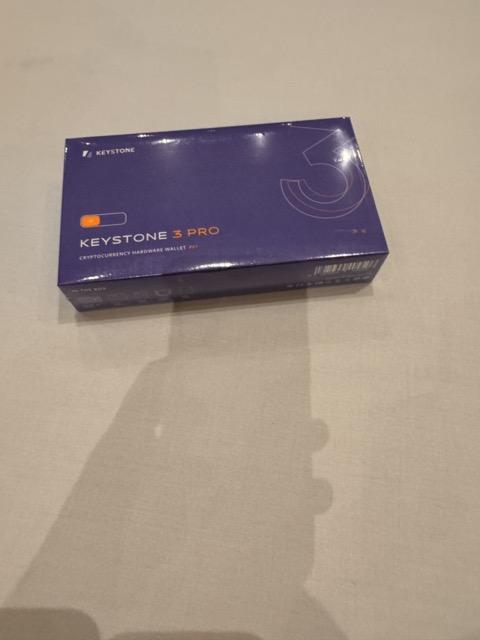
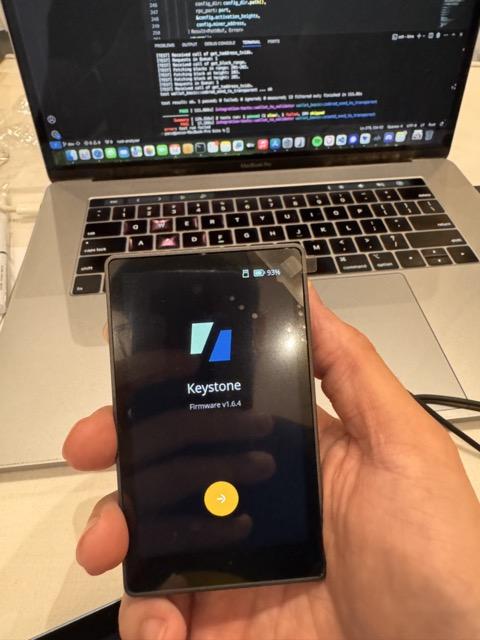
The wallet product team (aka Andrea) had prepared a surprise for the whole room. When we arrived we had the delight of seeing Keystone devices for all attendants. During the day we had to update the stock firmware to the latest which supports Zcash. This can either be done by breaking the device’s air gap by plugging the device to a computer or by loading the firmware with an SD card.
Recommendation: it’s 2025 and we still have to complain about this. SD readers have historically presented flaws when recognizing different SD cards, even from the same manufacturer. I had known this since my tech support days when I was a college freshman 20 years ago and prevented any issues by just ordering the additional SD card with your keystone device.
This is the first time I had ever seen a keystone device. I had originally ordered one in December but it arrived when I got back from Z|ECC. Apparently there were quite a lot of orders for the holidays, which is awesome for them.
Decentralistdan helped me to create an official Keystone Unboxing video for this post which you can see exclusively on free2z.
The workshop consisted of grabbing the Keystone wallet and performing two basic operations .
- Setup the device
- Sign a transaction with Zashi
Setting up keystone
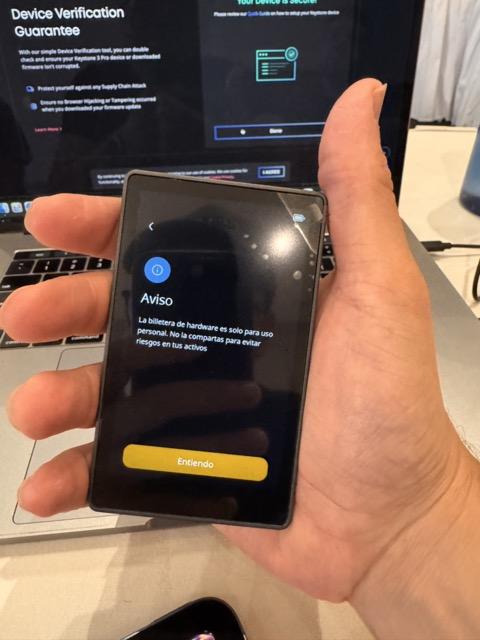
To set up a keystone device with Zashi you have to have a hot wallet already created in Zashi. This is somewhat different than other HW wallets but the ECC team will work to actually have a workflow to only use a HW Wallet.
If you ask me, I prefer having both. Since the Zashi wallet will contain my day to day ZEC and my Keystone section of Zashi will contain my long term ZEC holdings. It actually pays off as a way to mask away the presence of a HW wallet synced to my phone.
After backing up your Keystone seed phrase and storing it appropriately, you will see that BTC and ETH come selected by default. I removed those from my Keystone and proceeded to add ZEC. The ECC product team did a pretty good job convincing the Keystone product team to add Zcash up in the list of supported coins, because alphabetical A-to-Z lists are pretty problematic for Zcash marketing.
Setting up your wallet is pretty straight forward. Easier than Trezor and Ledger for sure.
The good parts:
The Keystone wallet seems robust, well designed, not heavy, not light. It is fast to set up, and simple to use. It can handle more than one seed phrase. It has passphrase, PIN and fingerprint authentication. It can handle Shielded and transparent diversified addresses and multiple accounts (Zashi still doesn’t so it hasn’t been exposed but soon will). It is all of what Ledger and Trezor had promised and SHAMELESSLY never delivered. Zcashers now have the top-tier hardware storage they deserve. I can totally see Zodlers switching to these hardware wallets and never looking back.
The improvement points:
I found the packaging and manuals not accessible at all. The contrast of the colors is not enough. Light violet and orange don’t play along well. In terms of household security, the device can be a bit difficult to hide. Ledger NANO X and S disguise as (thick) thumb drives but you can’t disguise a Keystone device much and it’s too bulky to find a place to hide it well. Maybe if you place it in your box of old cables and old cell phones you can hide the elephant around other elephants. The packaging comes with some seals but they are not enough. Some folks took the time to do it and reported having managed to use tweezers to carefully open their Keystones’ packaging without breaking the seals. The device itself doesn’t have USB and SD card seals as Trezor devices do.
We found a problem with Lens glare in phones and also artificial lights when scanning QR codes. It appears that some hertz frequency of LED lights can mess with Dynamic QR refresh rates and your Keystone device will struggle to read them. Also we found some devices having camera refresh rate problems.
Note: These problems have already been reported to Keystone already and they are committed to solve them. I don’t have doubts they will since they have over-delivered every single thing they committed to do.
Zashi Marketing
Tatyana (@peacemonger) had quite a challenge to follow the Keystone workshop session since the room was visibly experiencing high-dopamine in their system and were completely nerd-sniped at this point of the day by the hands-on workshop.
Her presentation was high-voltage as well featuring a roadmap for the Zashi product line (wink wink). I’m not sure how much of this I can share, but we were able to express a lot of opinions and feelings about these new proposals from the Zashi product team.
The dolphin paradox
There’s a product-success paradox, also known as Icarus Paradox or Success-to-failure problem, that consists of just having too much of what you crave. In terms of user adoption, it can be described as a “too much love will kill you” or “The dolphin paradox”.
There’s a story where once in a Beach crowded by tourists, a small dolphin was stranded. People ran to its “rescue” and were so overwhelmed by its cuteness that they ultimately ended up being the poor animal’s executioners.
In software, too much adoption at once can crush a product, collapse its infrastructure or incur in overwhelming costs that end up in system interruption and then user deception. There are many cases of free indie applications that used “serverless” infrastructure which became super popular in a matter of days or weeks and the developers couldn’t keep up with “cloud bills”.
A healthy adoption curve
The product team is very aware of the dangers that mass adoption brings to a small team as Zashi’s and it has been carefully driving its strategy towards an adoption curve that grows according to the team’s size and bandwidth. Tatyana walked us through some ideas to keep growing Zashi’s user base while adding more value and possible revenue streams that can make it a sustainable long-term product that Zodlers can rely on.
Brave, Filecoin and ECC
We’ve heard about this partnership long ago. Filecoin and Brave are two great allies of the Zcash project. Brave has been my browser for years. Its ability to combine browser extensions and privacy has been a killer product to me. Also they’ve leaned heavily towards integrating payments to the browser with their own wallet. A good alternative to Metmask et Al. Although, Brave is still missing its key feature: Shielded Payments.
The Brave team has been present in numerous Light Client Working Group calls, and is no stranger to me. They were now present remotely at Z|ECC due to logistics they couldn’t reconcile. But still their announcements were huge. They are committed to make Shielded Payments on Brave wallet possible in 2025. They are building a C++, Rust and Javascript stack to provide an out-of-the box shielded first experience in the browser early this year, followed by iOS and Android support and Memo attachments with IPFS
Media Memos protocol (ZIPs PR #899)
Media memos propose a protocol that is extensible by design built in around a URI that points to off-chain resources (to bypass size limits and avoid chain bloat). The objective is to be able to use media memos as a way to locate IPFS resources with the privacy guarantees of Zcash Shielded memos). You can see the proposal here
Web2 or Web3 content moderation.
Having decentralized media is cool! But some ethical challenges arise. What to do with respect to morally or legally objectionable content (like crime advocacy, child pornography, hate speech like holocaust denial, etc)? This is actually an unsolved problem, and each approach at it comes with its own drawbacks. Transactions controls could be a way to mitigate this problem.
QEDIT has proposed a mechanism for the receiver of a transaction to reject it. This was thought originally to avoid TX spam that other chains like Etheum, Solana and Tron suffer where there’s a lot of dust floating in the air and it’s not clear whether it’s put there by scammers, three-letter-agencies, trolls or “all of the above”.
‘This discussion ran long and it got pretty heated up as we Zcashers like to debate things. What are your thoughts about moderation of a decentralized, shielded, private, media platform? I’ll read you in the comments below.
The night fell again and we headed to our chambers and gathered for dinner where discussions, talks, jokes and stories would continue until late under an incredibly bright full moon.
Bonus!
I leave you with the official unboxing of a Keystone devices Zashi limited edition.