You are reading Day 1 of the Z|ECC summit chronicles. You can read Day 0 here
Prague means where it all begins
The first day of Z|ECC Summit started at 9am with a welcome from Josh Swihart CEO of ECC and creator of these gatherings that are becoming a tradition within the Zcash ecosystem.
Although it all began differently this time when introductions would come later. A recollection of past editions of these encounters was something that would set the mood for what would come. I went back to my notes from the first Zeebot where some things had changed and others remained the same. In that occasion the Zeebot was meant to be an ecosystem reboot. A lot of retrospection happened to go back to the roots of the cypherpunk movement and to ask Zcashers “what was really important to them”.
A return to first principles and a vision to build in th short, mid and long term. One of the conclusions of the original Zeboot that took place 18 months prior to this summit was to be able to store and DEX with ZEC, deprecate Zcashd to be able to shrug off the burden of tech debt and be able to start evolving Zcash to its future vision. Although we still have a lot to do to deprecate Zcashd we haven’t been this close ever. Also Storage and DEX of ZEC is now a reality thanks to different efforts across the ecosystem such as Keystone integration and the reconstruction of a path forward for ledger live integration of shielded ZEC, the Maya and NEAR intents DEX integration and the newly RHEA liquidity pool to earn yield with ZEC.
All of these things are happening has I write this article. Zcash is going where Zebooters set the course of action by hearing the community’s voice through ZURE surveys and the different polls across ZCAP, ZAP, forum and coin holder polls.
One could breathe the airs of change. This summit was FULL with representatives from teams like Shielded Labs, Zingo, NEAR, RedBridge, ZCG, QEDIT, ZEC Hub, ZK Av Club and the Zcash Foundation. Plurality of voices was ensured. A special recognition to be made to Alex, Director of the Zcash Foundation who made the decision for Arya and Marek to participate of the summit. These summits had lacked ZF engineering representation that I honestly never understood the reason behind it. I celebrate that this summit could count with ZF’s voice. Without it, it would have been impossible to make the agreements, consensus and decisions that were made.
The “local connection” was another important factor for the success of off-site activities during the days of the summit. Marek, Jay, Andrea and Lukas played a huge role in showing us around Prague and its surroundings in a way that only people living there can.
Setting the scene
The foundation of this summit would be the thoughts of the leader of Czechoslovakia’s pacific revolution, Vaclav Havel. The day before the summit began I went to a walking tour around Prague where I learned that “Praha” meant “where things began” in an ancient language. The summit was portrayed that way. The beginning of a new path forward. ECC presented their three pillars of the times to come for them:
- To live in truth, which means to live into the things people know outside of the established ideology.
- Building a parallel polis, a system outside and besides the system that represents that truth.
- Ship what matters, fast. Continue with Zcash ATH in collaboration to build what matters, faster.
According to them, parallel ZEC polis would mean a fully integrated stack in terms of technology, for a community that is broad and inclusive, with a decentralized governance, in transparency of source code, governance and distribution of funds; with R&D and regulations; that disseminates information and creates an ZEC-based economy funded with and for ZEC with liquidity and several access points.
What matters to ECC is the Unstoppable private money that has a no friction user experience, for everyone everywhere without limitations build on three pillars: Access, Privacy and self custody. To achieve this ECC communicated its priorities for the third quarter of 2025:
- Coin Holder Grant Application
- NU 6.1
- DEX Integration
- Off boarding
- Zcashd deprecation
For the 18 months to follow ECC will focus on NU 6.1 implementation of grant voting and lockbox disbursement, NU7 (ZSAs, NSM, Zallet, Zcashd retirement) and Tachyon.
The next section of the discussion will take place after presentation of the attending organizations which ECC enumerated as ZF, NEAR, ZCG, RedDev, QEDIT, Shielded Labs, ZecHUB, Zingo Labs, Tangible Codes and… Pacu. It was very moving to see myself at the same level of these champions. That is possible thanks to the confidence, support, encouragement and funding from the Zcash community. It wouldn’t have been possible without all of that. I’m grateful and honored to be part of this ecosystem. That recognition felt as a collective achievement. My work is as much as the sum of all the parts and all the teams I collaborate with daily. My gratitude to you all is immense.
Next we would hear what’s the word on crypto in Washington DC.
Policy updates
Besides what’s publicly known, ECC's policy guy reported an important shift in US’s federal policies towards the crypto industry. The past administration had been adversarial to crypto and even more to privacy coins. Currently the administration is moving towards establishing policies for holding strategic assets (crypto), banning CBDCs and stopping all efforts done towards their creation in favor of Stable coins and a clear regulation via the GENIUS act and clear treasury and auditing policies that guarantee a 1 to 1 ratio of USD backing USD denominated stables.
This shift is not a free-for-all kind of thing but a path towards regulating the industry with clarity for consumer protection in mind and with focus on payment innovation. Takeaways from ECC on this matter is to continue to focus in policy advocacy, steering the conversations and educating lawmakers so that regulations that will inevitably happen with broad adoption of crypto at a global scale accompany the vision of building and shipping, onboarding new ZEC users and collaborating and influencing big actors of the policy and law making.
I went back to my previous notes again and the shift in policy updates was 180 degrees. While the previous summit update on policy was very similar to a “call to arms” you can notice this wasn’t that at all.
The focus of the next session would be NU 6.1
Status of NU 6.1
The core team went through the Relevant zips around this upgrade some of them directly involved and other affected or dependent of it. Starting with 1016, the community and coinholder funding model (NU6); ZIP-271 one-time lockbox disbursement which satisfies 1016’s requirements without needing a transaction format change, disburses to a P2SH multisig wallet; ZIP-272 the ongoing lockbox disbursement (NU7)
The current status of this is that Zebra and Zcashd consensus changes needed for NU 6.1 are done but the P2SH to shielded functionality is not ready or at least not publicly available. This means that if someone using Zcash technology has implemented it, it was not released publicly in a way that the research carried out by core developers could find it. Given that FROST pieces for this are still to be defined in both spec and development, this path was deemed as the most viable according to time and resource constraints.
With the release of NU 6.1 a new era begins for protocol funded development. The Coinholders will have a greater voice than they ever had before by signaling which grants applying for that funding stream should be funded or not. Jason McGee from Shielded Labs and ZCG committee member will follow next with a presentation of a proposal on how these new grant program should be structured.
Coinholder-directed grants program
How do grants work today?
Currently all ZCG grants are milestone based. In a nutshell grant applicants structure their proposal in one or more milestones they have to achieve and get approved in order to get a payout, plus, optional service and hardware costs and initial payment that can be requested upfront. In most grants, work is payed as it goes. For this ZCG has to hedge agains volatility of ZEC in order to be able to honor their payout commitment with approved grants.
This has deemed to be complex and requiring significant oversight from the committee and Jason believes that it’s not suitable for big grants and even less those that would need oversight from a coinholder corpus and the orgs holding the multisig wallet that makes the payments. Hedging out to honor payments its both a logistics and legal question. Should the multisig custodians buy USDT on a DEX to honor a fiat denominated grant?
The proposal for Coinholder-directed grants
These questions and issues are significantly simplified by making this grant program retroactive. Oversight would be reduced significantly because payment requests are done when the grant is completed which holds a single verification instance and not periodic oversight involving payments. Although this is has its drawbacks given that not all teams can fund themselves. Given that ZCG grants are still available, teams can choose which program is more suitable to their structure and capabilities.
Overall I believe this proposal made a lot of sense and it seemed to have acceptance across the room. As always, “Don’t trust, verify!”. Go and see the whole proposal on the Zcash forums.
Talking about new things coming to Zcash it was the turn to discuss the scalable Zcash of tomorrow.
TACHYON
Zcash today
Our dear protocol is the most private cryptocurrency on Earth (FACT). Although, not fastest. Core engineers walked us through four potential issues (well some of them we have experienced already…. [cries in sandblasting]). Nodes need to check all nullifiers to make sure nobody is double-spending (1); wallets also need to maintain state continuously (2) and trial decrypt whatever shielded note they come across to know if its theirs (3) as chain size grows as transactions increase in size and volume (4).
How would Tachyon help?
What if wallets could help nodes prevent double spending? Yes, this is the level of “upside down” reasoning that Tachyon brings. With Tachyon wallets can generate proofs that help verifying that there are no double spends without nodes or other services interested in verifying the network needing to check every single nullifier (1). By leveraging zk-proofs nothing is leaked and wallets don’t need to trust servers or nodes. This creates a new world of “syncing services” that can take the processing burden off wallets since wallets can validate whether these servers are serving the right info (2).
Where we are going we don’t need addresses

Wallets won’t need addresses anymore given that recipients will know what to look for to detect a transaction (3). This can be scary to those already familiarized with how crypto works today. No addresses? That’s crazy! Every single interface will break!
Do you know what is this for?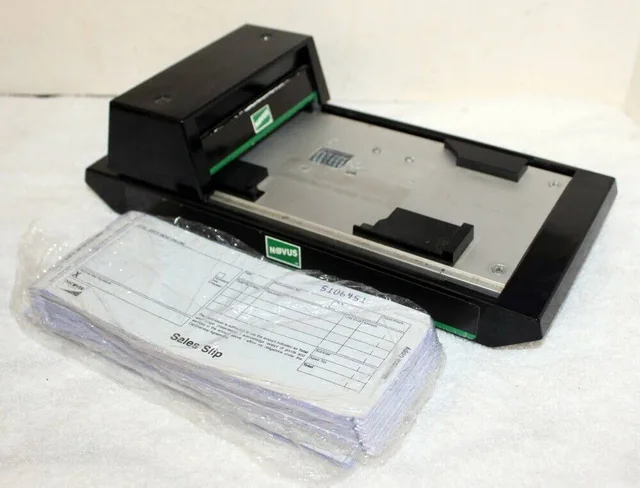
This is how credit card payments looked like back in the old days. Crypto payments are on this stage. We are still in the early days. These are the “good ol’ days” and we should be weary of changes. If we take a step back and look at how crypto payments work nowadays we have to admit it: Addresses don’t make any sense to normies. If we think of it, credit cards numbers don’t make any sense either, we just have been educated to accept them for decades. In fact, modern credit cards don’t have any information on them anymore. Probably the only reason we need credit card numbers today is because of web forms requiring users to input the card details to authorize payments. People born today won’t even know credit card numbers ever existed. They’ll probably learn of them on a school trip to a museum. This should and MUST be the case for many of the crypto UX that we know today. What are the alternatives to an address?
An “unstoppable private money” protocol must be a forever-running perpetual engine. Zcash can’t be stopped. That’s somewhat a reality. But the fact that nodes need to store every transaction that has ever existed in the blockchain is not sustainable for something that is meant to run forever until the ends of time. Tachyon’s extensive use of Zk-proofs to prove stuff also changes the fact that everything that has happened in the blockchain needs to be stored by every single node. By being able to rely on the proof instead of the data itself, Tachyon can allow nodes to discard full transactions. This brings up a new possible role: The Archive Node.
Hard fact to swallow: as Tachyon nodes don’t need to hold every transaction in their history, wallets won’t be able to sync from scratch.
Wait… what? Yes. Reliable and regularly updated wallet backups are critical to preserve a wallet’s history. Neither full viewing keys as we know them would make sense if a wallet can’t fully recover its history from chain. Tachyon is built from first principles of scalable privacy. Its core functionality is to maximize privacy and throughput. Payment disclosure mechanisms are important but the focus shifts to individual payments. Eliminating viewing keys removes one of the most damaging privacy leaks that can happen with Zcash. Viewing keys provide a view to the past transaction but also a window to transactions to be. When a viewing key is acquired by an adversary, its owner has no way to know that. The victim of the attack will continue to transact with those keys while the adversary has a front row seat to that wallet activity. The same way that “The only bug-free code its the one that’s never written”, the most secure viewing key is the one that doesn’t exist. An adversary can’t get ahold of something that it is non-existent. Clever, huh?
According to core developers, one big advantage of Tachyon is that its composing parts can be implemented gradually. So Tachyon won’t mean a big reveal where everything will have to be unlearned to a new beginning. Existing and new features will be able to co-exist. Although, not having to squint when reading addresses will be far more effective at fighting facial expression wrinkles than all the ZEC you are pouring into skin care products.
Zcash’s future is bright and hybrid. That’s the last section of our day at Z|ECC summit Prague with Crosslink updates
Crosslink: the future is hybrid.
On of the things I like about Shielded Labs is their Roadmap page. A simple way to see where the team is at, what’s been done, what they are doing right now and what’s next.
“The approach we are taking is to get things out and let people play with them”.
This was the opener of the Crosslink team rep. Quite a game changer from what we are used to in the Zcash world.
Shielded Labs also presented what they’ve drafted as their “Productionization Phase”. What I could understand is that they put together a short feedback loop process where they document architectural decisions of the crosslink implementation, develop them and put them into play. By doing so they get to prove their assumptions, measure the implementation, harden the design until they can lock down that particular requirement. Their jargon for this are CLADR’s: crosslink architectural decisions put in a straight-forward written form that shape the implementation of the Hybrid PoW-PoS protocol.
I don’t want to bore you with procedures, so these are the first principles that I could collect from their talk. Crosslink nodes must have Objective Verifiability: the ability to verify that It’s own history is valid without external information. At a collective level, crosslink nodes must be able to reach consensus: this means to come to an agreement that their shared history of the blockchain is canonical. In terms of performance and capabilities, Crosslink nodes verifiers must be able to join the network and start validating in no time. Although it seems a logical thing, these first principles are not specifically guaranteed by the PoW consensus protocol we currently run in our nodes. Trailing Finality is one of the most important things to achieve in order to integrate Zcash to the Web3 DeFi maze. But apparently this is not the only thing Shielded Labs has in mind.
“We sometimes joke about the term Wallifier - A wallet that’s also a verifier”.
Chatham House rules don’t let me attribute this, but I know Lore when I see it.
The room dispersed while chanting “wallifier! wallifier!”... well not exactly, but it was definitely something that resounded for the LuLz and also because who wouldn’t want handheld Zcash wallifier in their pockets?