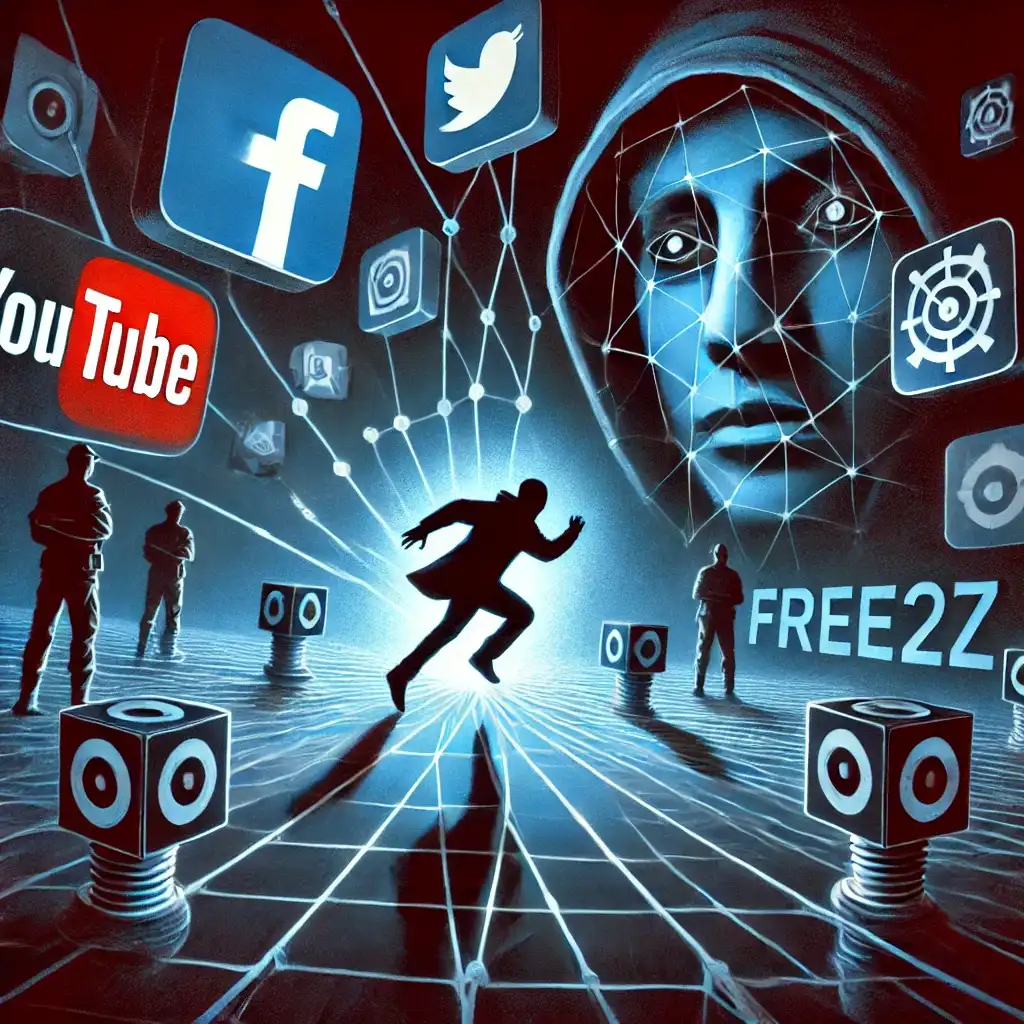
The "free" platforms you use are designed to accumulate your personal data. For example, YouTube, X, and most other web2 social media platforms profit from your data. This is essentially their only source of revenue.
That's all good — so, these platforms monetize user data. So what? They give you free services and use your data to show you relevant ads. It's a win-win, right?
Well, one notable problem is that these platforms create profiles for people who don't even use their services.
... companies collected and could indefinitely retain troves of data, including information from data brokers, and about both users and non-users of their platforms.
The Unseen Web of Surveillance
These platforms don't just stop at harvesting data from their users. They extend their reach to track even those who consciously choose not to engage with them. Through tracking codes embedded in share URLs, they can collect data about anyone who is even sent a link.
Imagine you're in a group chat with friends. Someone shares a YouTube link or a tweet. Even if you don't click on it, the messaging app will automatically fetch a preview — known as a "social card" — to display a thumbnail. In doing so, your app has contacted YouTube or X servers, handing over your IP address and other metadata. Data about everyone in the chat is now connected to this shared URL.
This isn't just passive data collection; it's active surveillance. These platforms build a shadow profile of your interests and social connections without your consent or even your knowledge.
How Tracking Codes in URLs Work
These tracking codes are appended to URLs when you share content from these platforms. On X, it's the
?t=parameter, and on YouTube, it's the?si=parameter. These codes serve as unique identifiers that help the platforms track how and where their content is shared.When a link with a tracking code is shared in a chat room or text message, most clients will request the page to generate the social card. This request includes the tracking code, allowing the platform to collect data about who is sharing and viewing the link — even if they never click on it.
If you use these platforms, you should do everyone a favor and trim these tracking codes from the URLs. Remove the
?t=...from X links and the?si=...from YouTube links. This simple act can help reduce unnecessary data collection.
The Ethical Abyss
Let's call this what it is: unethical. Collecting data from non-users violates basic principles of consent and privacy. It's one thing to agree to terms of service that you probably didn't read (but at least had the option to). It's another entirely to be surveilled simply because someone else shared a link.
These practices aren't just invasive; they erode the foundational trust that should exist between technology providers and the public. When platforms engage in clandestine data collection, they betray the very users they claim to serve, under the guise of providing free services.
The Futility of Regulation and Regulatory Capture
Some might pin their hopes on government regulation to rein in these excesses. But let's be real: government intervention is often counterproductive. The big platforms not only have the resources to comply with new regulations but also to influence them. They can lobby for laws that entrench their dominance, creating barriers to entry for smaller competitors and stifling innovation.
Expecting the government to solve this problem is not just naive; it's enabling. Regulations can become tools for the big players to shut out competition, all while doing little to protect individual privacy.
Moreover, it's not just about profit anymore. These platforms are large enough and influential enough that they don't necessarily need profit as their sole motivator. The vast amounts of data they collect can be used for mass manipulation, shaping public opinion and influencing societal behaviors. The potential for social credit systems and other forms of control is not a dystopian fantasy but a looming reality.
The Path Forward: Take Control
So, what's the solution? Stop relying on platforms that exploit you. Use alternative sites like Free2Z or build your own platforms. The tools to create and share content independently have never been more accessible. Decentralized technologies and open-source software empower us to bypass the gatekeepers.
By taking control of the platforms we use, we can dictate the terms of engagement, prioritizing privacy and consent over centralized control.
The Hypocrisy of "Privacy Advocates"
But here's the kicker: even so-called privacy advocates are complicit in this mess. They rant about surveillance capitalism, yet continue to build their followings on the very platforms that perpetrate these abuses. Why? Because it's easy. Because that's where the audience is. Because they're more interested in clout than actual change.
This isn't advocacy; it's performative outrage. Their words ring hollow when their actions contribute to the problem. There's a perverse incentive at play: the more they decry the platforms, the more attention they get—on those same platforms.
Breaking the Cycle
We need to demand more than lip service. Real advocacy requires commitment. It means leaving behind the convenience of established platforms to forge new paths. It means choosing principles over popularity.
The cycle won't break itself. As long as we continue to feed the beasts of surveillance capitalism with our time, attention, and data, they'll keep growing stronger. It's up to us to starve them.
Conclusion
The pervasive surveillance and data exploitation by platforms like YouTube and the rest are not just unfortunate side effects of modern technology—they are deliberate strategies for control. These companies have shown that they will cross ethical lines without hesitation, even targeting non-users in their data nets.
Government regulation won't save us. In fact, it may only entrench the power of these platforms further. We have to save ourselves by opting out, supporting alternative platforms, and holding so-called privacy advocates accountable for their contradictions.
It's time to take a stand. Our privacy is not a commodity, and it's high time we stopped treating it like one.
Note: Every post you make to Free2Z is greatly appreciated. Free2Z is not a gift to you; you are a gift to Free2Z! Every interaction on Free2Z is a step away from surveillance and a step towards freedom. Without you, Free2Z is nothing.