
Proportional Relationships and Percentages
Proportional relationships
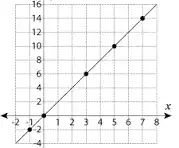
Proportional relationships are equations that show a direct relationship between two variables. In a proportional relationship, the ratio between the two variables remains constant, meaning that if one variable increases, the other variable increases by the same factor. Proportional relationships can be used to represent real-world situations, such as the relationship between the speed of a car and the distance it travels.
NonProportional relationships
Nonproportional relationships are relationships between two variables where the ratio of one to the other does not remain constant. This type of relationship can be seen in a variety of situations such as when graphing lines on a coordinate plane. In this case, the line is not a straight line, but instead curves or bends. This type of relationship can also be seen in real-world scenarios such as the relationship between the speed of a car and the distance it travels. In this case, the speed is not constant, so the ratio of speed to distance is not constant either. Nonproportional relationships can also be seen in the relationship between the amount of time spent studying and the grade a student receives. Here, the amount of time spent studying does not necessarily guarantee a certain grade, as the relationship between the two is not proportional.
percentages
Percentages are used to express a part of a whole as a proportion of 100. Percentages are used to compare and convert fractions and decimals, and can be used to calculate discounts, taxes, and interest. Percentages are also used to denote the likelihood of an event occurring, such as the probability of winning a lottery. Percentages can be expressed as a fraction, decimal, or ratio, and are often used to compare different values to each other.