
Cryptography and Ciphers
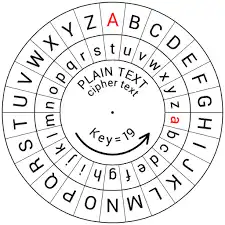
Cryptography is the study and practice of techniques for secure communication in the presence of adversaries. It involves creating written or generated codes that allow information to be kept secret. This practice dates back to the times of Julius Caesar, who is attributed to one of the earliest and simplest forms of a cipher called the Caesar Cipher. This type of substitution cipher works by shifting the letters of the alphabet by a fixed number. For example, with a shift of 3, A would be replaced by D, B would become E, and so forth. This method of encryption was revolutionary at its time and continues to be a classic example taught in cryptography.
Zero-Knowledge Proofs
As cryptographic techniques evolved, the need for more sophisticated and secure methods became apparent. This is where techniques like Zero-Knowledge Proofs (ZKPs) come in. In a Zero-Knowledge Proof, one party (the prover) can prove to another party (the verifier) that they know a value x, without conveying any information apart from the fact that they know the value x. This concept is a fundamental building block in modern cryptography, and it's essential in creating secure digital systems where one party needs to prove their identity or knowledge without revealing any sensitive information.
Secure Hash Algorithms
Further, the development of the digital age necessitated algorithms that could create unique identifiers for data, leading to the creation of cryptographic hash functions. A prime example is SHA-256, a member of the SHA-2 (Secure Hash Algorithm 2) set. SHA-256 generates an almost-unique 256-bit (32-byte) signature for a text. The key characteristic of this function is that it's a one-way operation. This means it's computationally impracticable to reverse the process by regenerating the original data given the hash output, making it an ideal choice for security applications and data integrity checks.
SSL
Secure Sockets Layer (SSL) is another critical concept in cryptography that ensures internet security. SSL is a standard protocol for securing internet connections by encrypting information moving between two systems, preventing criminals from reading and modifying any transferred information, including potential personal details. Every time you see a small padlock icon in the address bar of your browser, SSL ensures the data you send will be private and won't be intercepted by third parties.
Ciphers
Ciphers, a close kin of codes, are also a central part of cryptography. While a code is a system of symbolic representation, a cipher is a method of transforming a message to conceal its meaning. Modern ciphers are algorithm-based, and they convert plain text into encrypted text by performing computations, often relying on a piece of auxiliary information known as a key. Ciphers can be symmetric, where the same key is used for encryption and decryption, or asymmetric, where different keys are used for each process.
Vulnerabilities
However, no system of cryptography is completely impervious to attack. Potential vulnerabilities can be exploited through cryptographic attacks. These can range from brute-force attacks, where an attacker systematically checks all possible keys until the correct one is found, to more sophisticated techniques like side-channel attacks, which exploit physical information leaked during the computation, such as power consumption or electromagnetic emissions.
Conclusion
Cryptography plays an essential role in securing our daily digital interactions, be it through internet browsing, ATM withdrawals, or secure government communications. The field is dynamic and evolving, driven by the constant need for more secure and efficient ways to protect information. From the Caesar cipher to SHA-256 and SSL, cryptography will continue to shape the security landscape of the digital world.