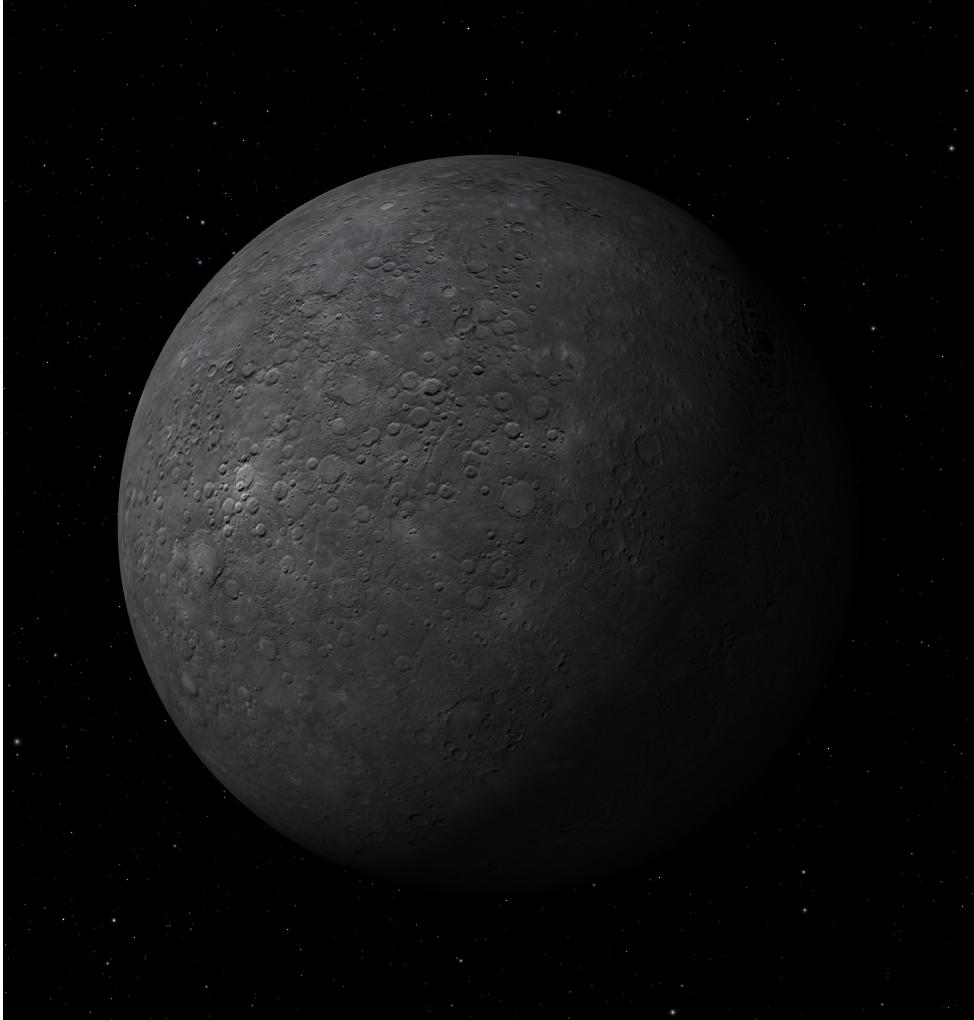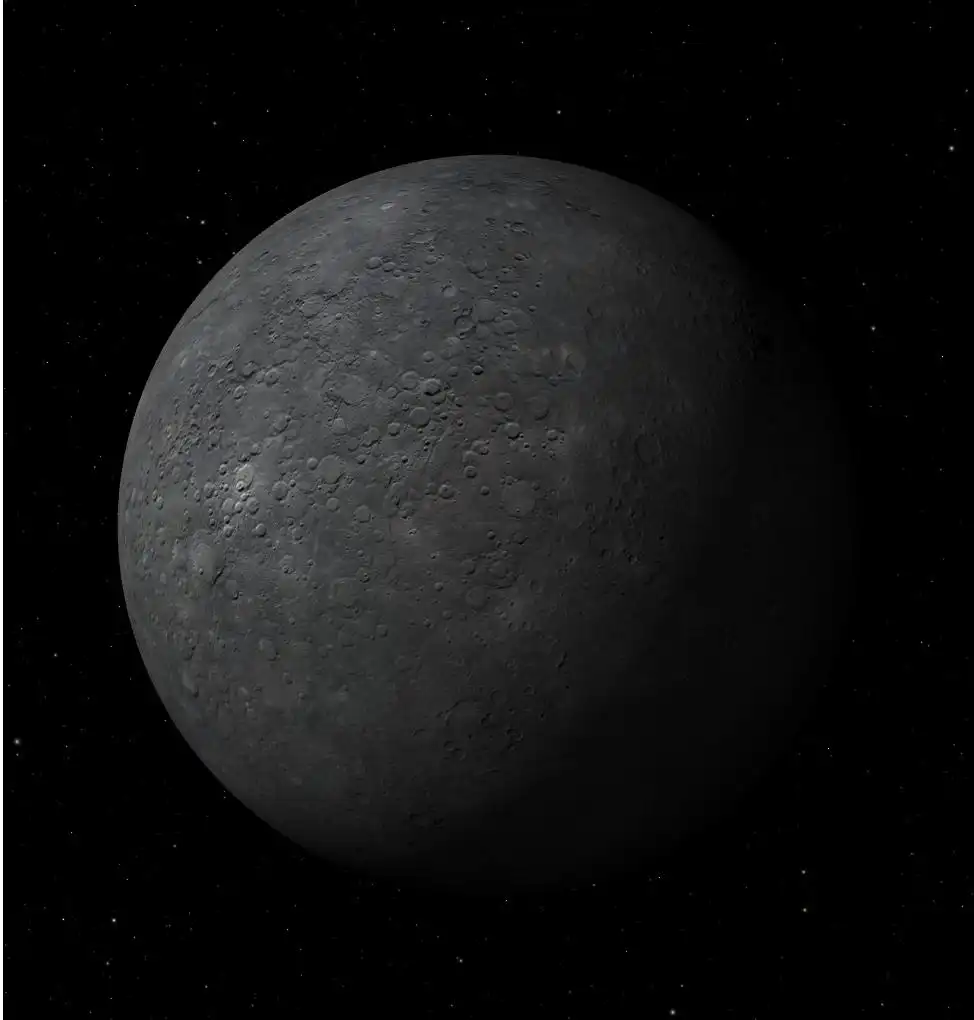

Mercury is the smallest planet in the solar system and is the closest planet to the sun. It is a rocky planet, with a diameter of 4,879 km, making it just slightly larger than Earth's moon. It has a very thin atmosphere composed mostly of oxygen, sodium, and helium. It has no moons or rings.
Mercury has a very slow rotation, taking 59 Earth days to complete one day. It also has a slow orbit around the sun, taking 88 Earth days to complete one orbit. This slow rotation and orbit cause the side of Mercury that faces the sun to be very hot, while the side away from the sun is very cold. The average temperature on the surface of Mercury is around 167°C, making it the hottest planet in the solar system.
Mercury has a heavily cratered surface, due to its lack of atmosphere and its close proximity to the sun. It is believed that the planet was once much more volcanically active, but the intense heat from the sun made the surface very dry and barren.
The gravity on Mercury is very weak, only 38% of Earth's. This makes it very difficult to land spacecraft on the planet. The Mariner 10 probe was the first to visit Mercury in 1974, and the Messenger probe visited Mercury in 2011. The BepiColombo mission is currently en route to Mercury and is expected to arrive in 2025.