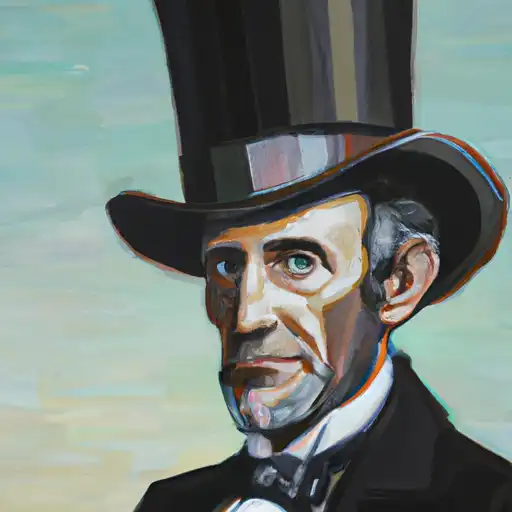
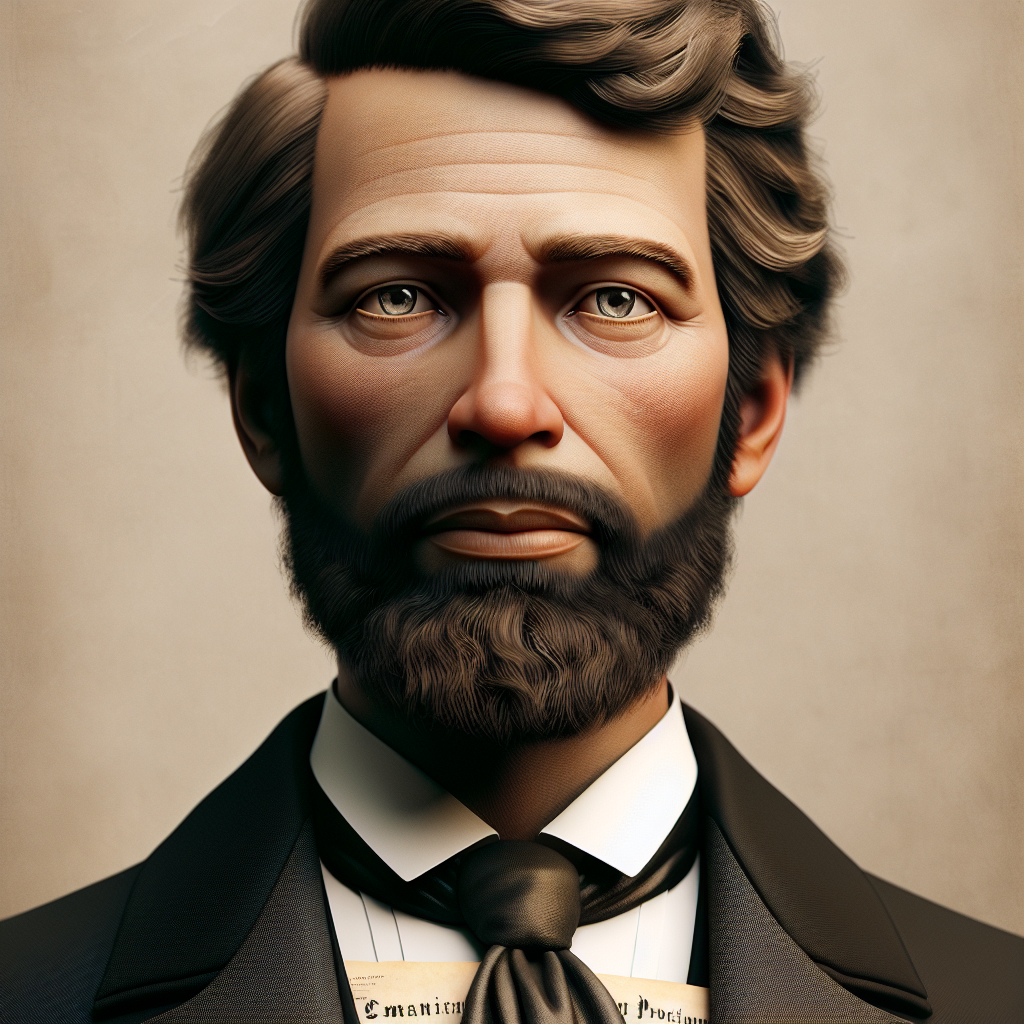
Abraham Lincoln was born on February 12, 1809 in Hardin County, Kentucky. He was the second child of Thomas and Nancy Lincoln. His father was a farmer and carpenter.
Lincoln received only a few months of formal education, but he was a voracious reader and studied on his own. He moved with his family to Indiana in 1816 and to Illinois in 1830.
In 1834, Lincoln was elected to the Illinois state legislature, where he served four terms. He was a Whig and strongly opposed slavery. In 1846, he was elected to the United States House of Representatives.
In 1858, Lincoln ran for the United States Senate against Stephen Douglas. Although he lost the election, the debates between the two candidates helped to make him a national figure.
In 1860, Lincoln was nominated as the Republican candidate for president. He won the election and was inaugurated on March 4, 1861.
In April of 1861, the Civil War began. Lincoln was determined to preserve the union and issued the Emancipation Proclamation in 1863, freeing all slaves in the rebellious states.
In 1864, Lincoln was re-elected as president. On April 9, 1865, General Robert E. Lee surrendered to General Ulysses S. Grant, effectively ending the Civil War.
On April 14, 1865, Lincoln was assassinated by John Wilkes Booth at Ford's Theatre in Washington, D.C. He was the first president to be assassinated in the United States.
Lincoln's legacy includes his role in preserving the Union, abolishing slavery, and his commitment to democracy. He is remembered as one of the greatest presidents in American history.
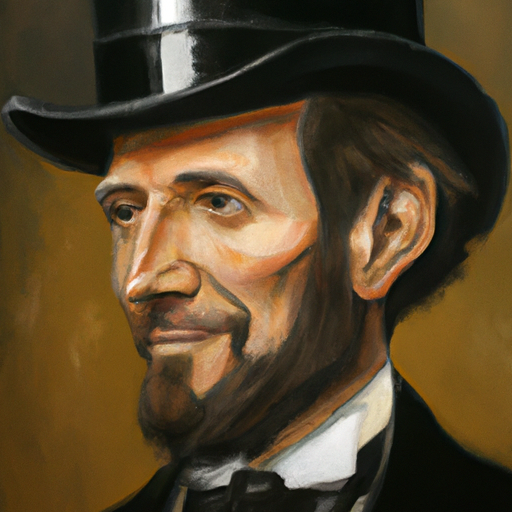
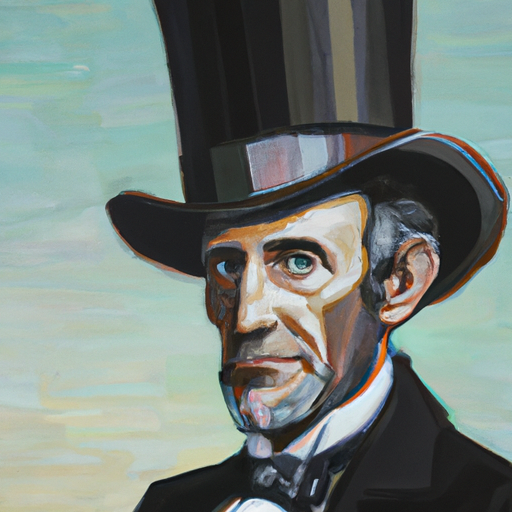
Day 1 (April 10th, 1865): Confederate General Robert E. Lee surrenders to Union General Ulysses S. Grant at Appomattox Court House, Virginia. The surrender marks the end of the American Civil War.
Day 2 (April 11th, 1865): President Abraham Lincoln issues his Proclamation of Amnesty and Reconstruction, which outlines his plan for Reconstruction of the South.
Day 3 (April 12th, 1865): President Lincoln visits Richmond, Virginia, the former capital of the Confederate States of America. He is greeted by cheering crowds of freed slaves.
Day 4 (April 13th, 1865): President Lincoln delivers his Second Inaugural Address in Washington, D.C. In it, he calls for reconciliation and healing between the North and South.
Day 5 (April 14th, 1865): President Lincoln is assassinated at Ford's Theatre in Washington, D.C. by John Wilkes Booth. Vice President Andrew Johnson becomes President.
Yo, GPT is whack!?
No, there is no evidence that Lincoln was greeted by crowds of freed slaves in Richmond on April 12th 1865. Reports from the time indicate that Lincoln was greeted by a small crowd of African Americans, but these were mostly local dignitaries, not freed slaves.