
Mon, Oct 30
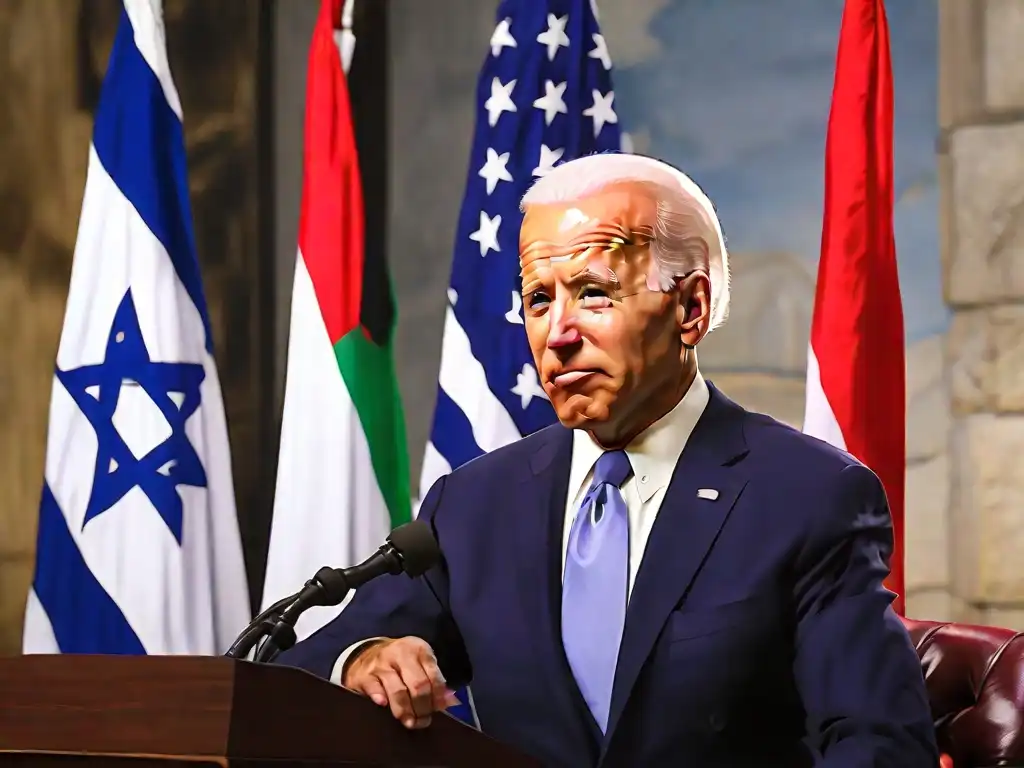
Recent developments in the Israel-Palestine conflict have unveiled a web of complex geopolitical dynamics. The Biden administration is actively preparing for the situation to escalate further, with a growing focus on safeguarding U.S. forces in the region.
Defense Secretary Lloyd Austin's discussions with Israeli Minister of Defense Yoav Gallant reflect the deepening concerns about the conflict's regional escalation. The shadow of Hezbollah, backed by Iran and based in Lebanon, looms large, raising the specter of intensified attacks against Israel.
Intriguingly, the link between Russia and China in the conflict emerges as a new variable. Hamas leader abroad, Khaled Mashal, reveals that the Russian government has indicated that their October 7 operation will be incorporated into military academies' teachings. This connection raises questions about the broader geopolitical interests at play in the Israel-Palestine conflict.
The information shared by Mashal also suggests that China is contemplating a similar attack, this time involving Taiwan. Such developments have the potential to reshape the geopolitical landscape in the Middle East and the Asia-Pacific region.
Furthermore, an additional revelation regarding the Biden administration's request for $106 billion in financial aid to Gaza's displaced residents and Ukrainian refugees raises concerns. While the funding aims to support humanitarian efforts in Israel, specific aspects of the request have garnered attention, particularly the reference to potential cross-border 'displacement' and 'asylum.' This has sparked concerns about forced Palestinian displacement into Egypt and the implications for Palestinian sovereignty.
Israel's Minister of Intelligence, Gila Gamliel, has authored a controversial proposal involving a three-stage relocation plan for Palestinians from Gaza. The plan includes the establishment of temporary tent cities in the Sinai Peninsula, the creation of a "humanitarian corridor" to facilitate Palestinian movement out of Gaza, and the construction of permanent cities in the northern part of the Sinai Peninsula.
These developments, in conjunction with the Biden administration's funding allocation, have left Palestinians deeply concerned, evoking memories of the traumatic Nakba. The Nakba was the forced displacement and dispossession of Palestinian Arabs during and after the 1948 Arab-Israeli War, a central issue in the Israeli-Palestinian conflict.
All these unfolding geopolitical complexities underscore the multifaceted nature of the Israel-Palestine conflict and its potential ripple effects on the broader global stage. As the situation continues to evolve, it highlights the need for diplomatic efforts, empathy, and a deep understanding of the geopolitical intricacies involved.
Sources:
Disclaimer: The information presented in this article is based on publicly available sources and is subject to change as new details emerge. The content is for informational purposes only and does not constitute official statements or endorsements.
If you value informative articles, support us with a donation. Click here or donate, Tip directly the article to strengthen the quest for truth. Thank you!