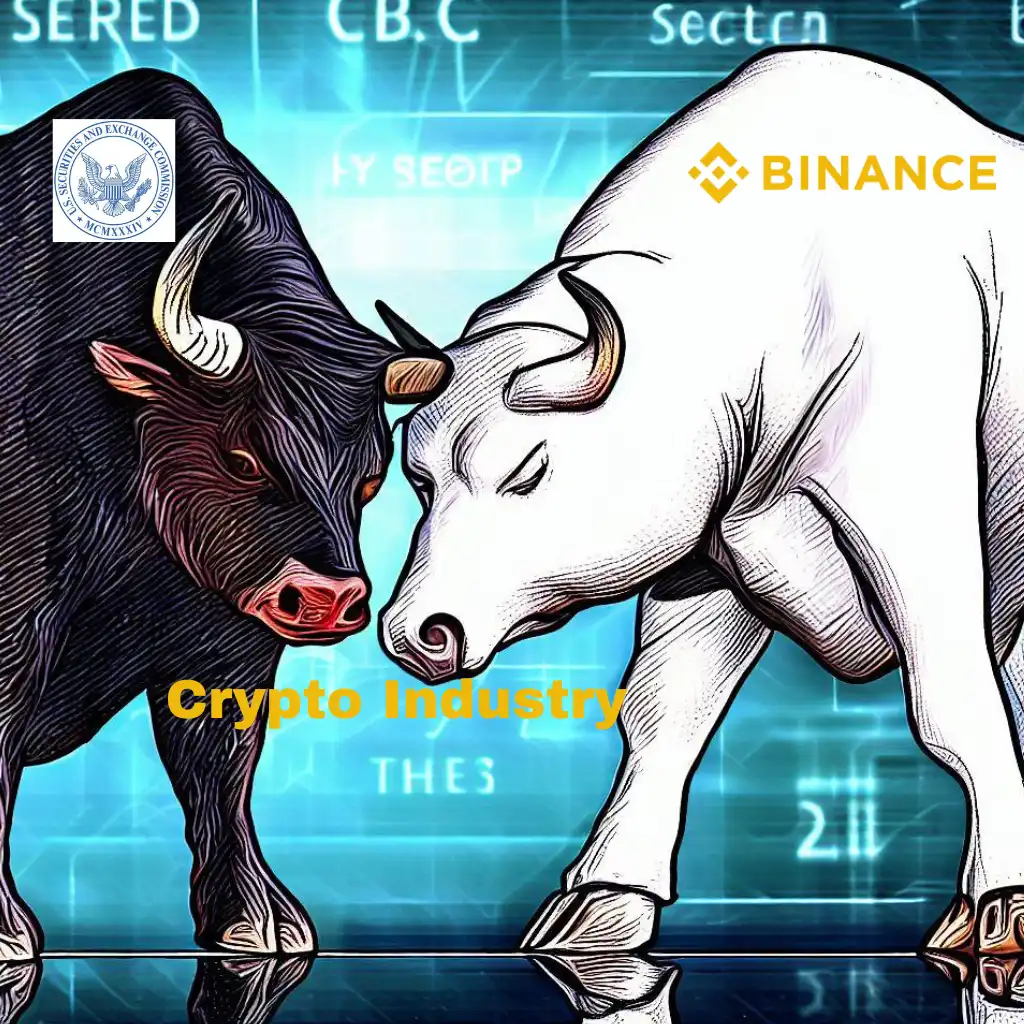

This is undoubtedly a hot topic in the cryptocurrency industry, as Binance is the largest centralized exchange for decentralized digital asset trading, and the U.S. Securities and Exchange Commission (SEC) is the entity overseeing the sector in Uncle Sam's territory.
After all, this clash of titans disrupts the market and raises many questions about the legitimacy of the process by the Securities and Exchange Commission because, despite suing Binance, they still don't have clear laws governing the decentralized digital asset market.
The Securities and Exchange Commission (SEC) did sue Binance, alleging non-compliance with various laws and violations of many others, and hefty fines are anticipated for the exchange. However, the American regulator may be using Binance to send a message to the world, in my opinion. Let's consider this: on June 1, 2023, the Hong Kong Securities and Futures Commission authorized the trading of certain cryptocurrencies, giving them the green light.
And just four days later, the Securities and Exchange Commission (SEC) sues Binance and includes a set of cryptocurrencies in the lawsuit that they consider securities violated by the exchange, to everyone's surprise, these are the same or more than the ones approved for trading in Hong Kong. Coincidence? I don't think so.
I'm not a big fan of Binance, but I'm a strong supporter of cryptocurrencies and I believe that governments worldwide view the market with suspicion mainly because they can't control it as they would like. When some governments start to show a slight favor towards the currency, others turn against them, saying, 'Wait a minute! I'm banning this business, and you're allowing it? Who are you to do that?'
In my view, this is the position of the United States towards governments that are giving the green light. Let's analyze it again. They don't have clear laws governing the crypto market and refuse to create specific ones for the market. And when others dare to create such laws, they send a message. After all, if they are securities in the land of the late Uncle Sam, how can they be traded in other jurisdictions?
The authoritarian nature of the U.S. government is often questionable, and they certainly don't want other regions to benefit from the cryptocurrency ecosystem, as we can clearly see from their behavior. Today, they consider Matic, Solana, Ada, and seven other cryptocurrencies as securities, and these have already been approved for trading in Hong Kong, where the local regulator has a set of rules governing the market for retail consumers.
It is important for Gary Gensler's company to bear in mind that the time for those who were asleep and didn't analyze things has long passed. Today, we can analyze the regulator's behavior and realize that there is a directive that doesn't want the crypto industry to evolve.
This is a problem that we all should be concerned about. After all, today they went after Binance to send a message, regardless of whether they are guilty or not. The SEC has a dangerous agenda concerning the crypto industry, and other companies operating in the field should prepare themselves because they are coming with everything they've got!
Coinbase should prepare itself because it is certainly the next target of the SEC. Since they dared to challenge the regulator, the approach will be cautious, but in the end, they will strike without a doubt.
I wonder, if they can claim that all thirteen cryptocurrencies listed as securities in the recent lawsuit against Binance, how did they classify them? And why did it take so long to say that?
The regulator is not being transparent and this is an attack to all crypto industry. I would like to hear your comment on this topic.
article 32