

In a landmark decision, the House Financial Services Committee has taken a significant step towards securing the rights of individuals to self-custody their digital assets, particularly Bitcoin and other crypto coins. The passing of this bill marks a pivotal moment in the world of decentralized finance and has garnered considerable attention from crypto enthusiasts, investors, and policymakers alike. This article delves into the implications of this legislation and its potential impact on the future of crypto coins and financial autonomy.
Self-custody, often referred to as "not your keys, not your coins," is a fundamental principle in the world of crypto coins. It underscores the significance of holding private keys to one's digital assets, granting users full control and ownership over their funds without relying on third-party intermediaries like centralized exchanges. This approach aligns with the core ethos of blockchain technology, empowering individuals with financial sovereignty, privacy, and security.
The recently passed bill seeks to formalize and safeguard the right to self-custody crypto coins in the United States. It addresses concerns raised by the crypto community regarding potential regulatory measures that could have curtailed this fundamental aspect of decentralized finance. By acknowledging and protecting the practice of self-custody, the legislation aims to provide clarity and confidence to investors, developers, and users in the crypto space.
Delving into Impacts on the Crypto Industry
The explicit recognition of self-custody rights could bolster investor confidence in the crypto market. With a clear legal framework to protect their digital assets, investors may feel more secure in committing substantial funds to crypto coins, leading to increased participation and capital influx into the market.
By safeguarding the right to self-custody, the bill may encourage blockchain developers to push the boundaries of decentralized technologies further. With reduced concerns about regulatory backlash, innovators may be more inclined to explore novel use cases and applications for crypto coins, potentially leading to groundbreaking advancements in the industry.
The legislation could also provide clarity for custodial service providers and exchanges operating in the U.S. By knowing the boundaries within which self-custody can be practiced, these entities can structure their offerings in a manner that complies with the law, fostering a more stable and regulated crypto ecosystem.
The passage of this bill could set a precedent for other countries considering cryptocurrency regulation. It might influence global discussions about the importance of preserving self-custody rights and the potential risks associated with impeding financial autonomy.
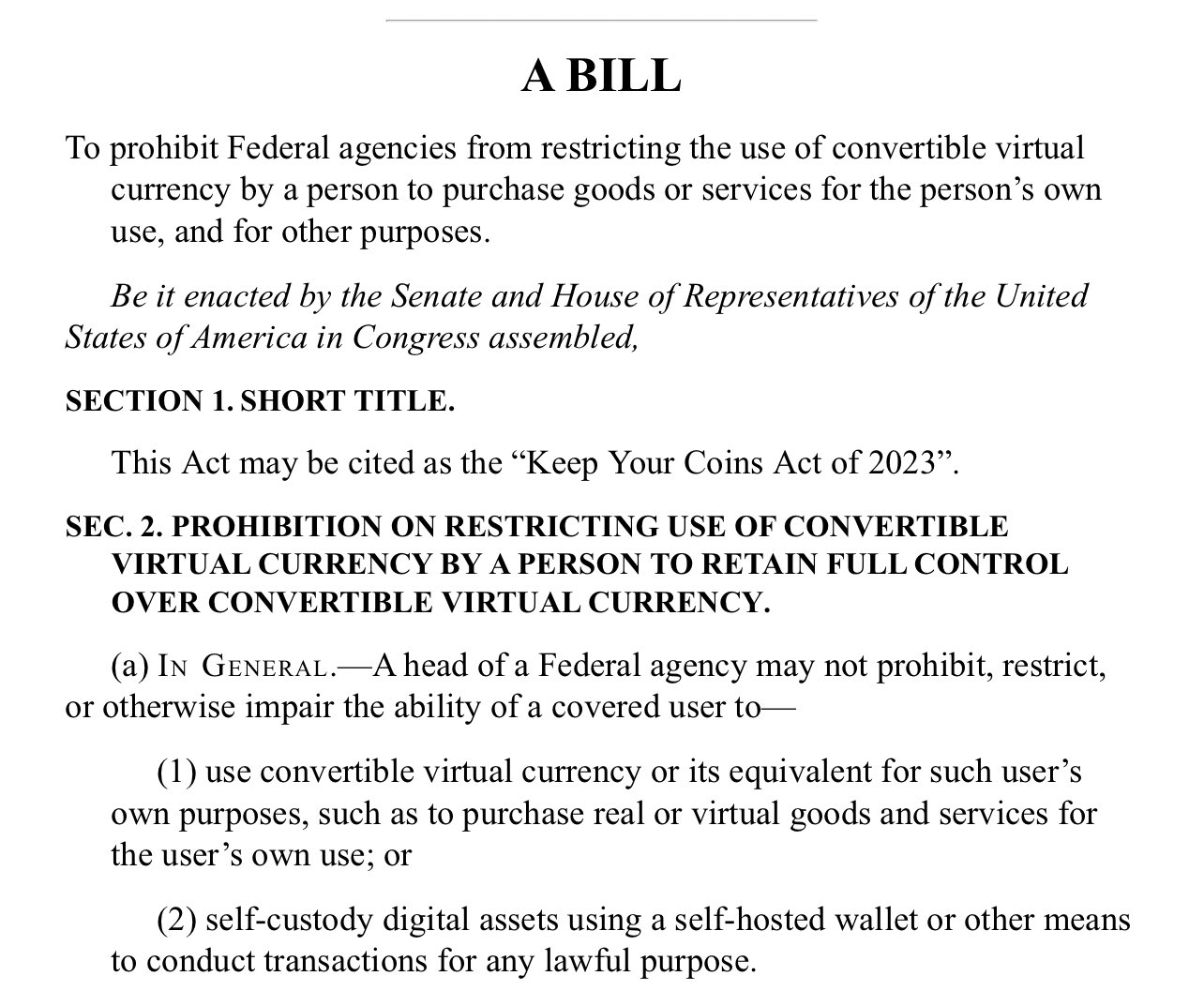
To conclude, the House Financial Services Committee's decision to pass the bill protecting the right to self-custody of Bitcoin and crypto coins is a significant development for the crypto space.
By acknowledging the importance of financial autonomy and security, the legislation aims to provide clarity and legal protection for investors and users in the rapidly evolving digital asset landscape. As the bill progresses through the legislative process, it is essential to monitor its potential impact on the broader crypto industry, investor sentiment, and the development of blockchain technologies worldwide.
The road to a more inclusive and regulated crypto ecosystem may still be long, but this bill represents a positive stride towards ensuring the rights and freedoms of those participating in the decentralized financial revolution.
After you have read the article, what do you think the bill approved yesterday could impact on self-custody of assets in the United States and worldwide? Share your opinion, and let's discuss together. Remember that your opinion is always important.
Article for informational purposes only
article 76