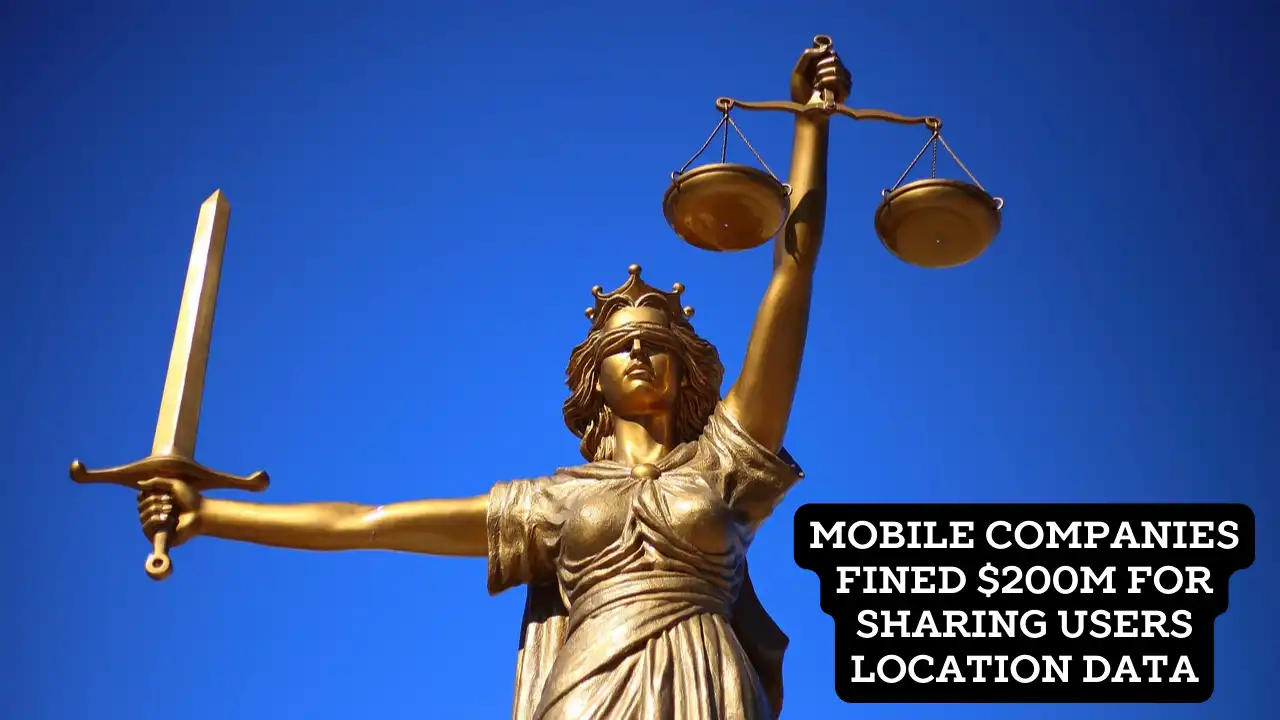

The recent revelation that major mobile carriers, including AT&T, Sprint, T-Mobile, and Verizon, were fined a staggering $200 million by the Federal Communications Commission (FCC) has sent shockwaves through the tech world.
What led to this unprecedented penalty?
The carriers were found guilty of sharing customers' real-time location data without their consent, a flagrant violation of privacy rights and a breach of trust that cannot be overlooked.
Let's dissect the gravity of this offense. Real-time location data is a sensitive piece of information that reveals intimate details about individuals' whereabouts, routines, and even personal lives.
By surreptitiously sharing this data with third parties, including law enforcement agencies and data brokers, these mobile giants violated their customers' fundamental right to privacy. Moreover, this data was sold without proper legal authorization, raising serious legal and ethical concerns.
The implications of this breach are profound. Imagine a scenario where your every move is tracked and monitored without your knowledge or consent.
This intrusion into personal privacy not only erodes trust between consumers and service providers but also exposes individuals to potential risks, such as stalking, identity theft, and unwarranted surveillance. It undermines the very fabric of privacy rights that are essential for a free and democratic society.
In light of these egregious violations, it is imperative that these mobile corporations are held accountable for their actions.
The FCC's decision to levy a hefty fine is a step in the right direction, but it should not end there. There must be thorough investigations to determine the extent of the data breach and identify all parties involved. Legal action should be taken against those responsible, including executives and decision-makers who allowed such practices to occur.
This incident marks the urgent need for Protecting Privacy in the Digital Age to get robust data protection laws and stringent regulations governing the collection, storage, and sharing of personal data.
Consumers must be empowered with greater control over their data and have the right to opt-in or opt-out of data sharing practices. Service providers must prioritize data security and implement measures to safeguard sensitive information from unauthorized access or misuse.
In Conclusion, the FCC's fine against AT&T, Sprint, T-Mobile, and Verizon serves as a stark reminder that privacy is not negotiable. It sends a clear message to corporations that flouting privacy laws will not be tolerated.
As we navigate the complexities of the digital age, it is incumbent upon all stakeholders—governments, regulatory bodies, corporations, and individuals—to prioritize privacy and work together to uphold the fundamental rights of every citizen.
Remember:
CONTENT IS KING!
Support this blog to incentivize my daily writings and to keep pace with all happenings in crypto: share, comment, tip ; after all, creators depend on sponsors donations to succeed.