
Mutiny | Decentralised Social Networks

A History Lesson
Living aboard a Royal Navy ship of the line in 1650 would have its advantages. Daily rations, travelling the seas & prizes if you survived the capture of an enemy vessel.
However, the leadership aboard the ship would have been highly objectionable. Most breaches in the Articles of War were punishable by death. For years aboard you would suffer flailings for misconduct & starved while higher ranking officers ate well.
Many would eventually turn to piracy. Ditching their uniform and hierarchecal subservience aboard a kings ship. Living conditions aboard a pirate ship were worse, many were willing to join despite this. Speaking measures to the human desire for fairness.
The abundance of piracy, strikes and rebellions within the Navy during this era (roughly 1655 to 1725) were rife. The single reason being abusive working conditions & unfair pay with no available recourse for the enlisted. Pirates would often raid Royalist transports of cargo being taken from colonies back to the british isles.
A revolutionary new democratic system was created. Pirate codes often described distribution of wealth, in most cases very fairly - according to skill and duty. Pirate crews also retained the right to depose their leader. The 1st rule of one particular pirate code: “Every man has a vote in affairs of moment.”
Just as sailors who all lived in close proximity aboard ship were able to coordinate and organise towards a better system, once workers moved from the countryside into the factories and cities the early 19th century, movements for industrial workers rights began to spring up.
Key point: When oppressed form assemblies and are able to communicate freely & intimately they will more often than not, organise towards a counter movement. It is in an oppressors best interests to stifle open & free public discourse.
Where are we now?
In the modern day we have unknowingly & gradually shifted from communal activities and spaces such as theaters, malls & arcades to purchasing alone online, meeting and speaking over video conferencing, playing video games on a console etc. Thought must be given to the mediums in which we now communicate with one another if is not primarily in person.
Proprietary software companies are locked into a system of price gouging, likewise we see encroachment on our digital soverignty from corporations such as Netflix imposing password-sharing limitations. All galvanise the cause of decentralised projects such as The Pirate Bay.
In the same vein, private companies inadvertently (or not) controlling public discourse will present an opportunity for New & Fairer platforms.
With the recent release of the Twitters algorithm it was found that users are clustered into groups of like-individuals. Penalties are applied to posts when you post 'out of network'.

"Misinformation" is also penalised. The question arises, who defines unmentionable topics & for what reasons?

Rules such as this are put in place to build engagement on a given platform. However at large enough scale they begin to have negative effects on discourse over large populations.
See echo chambers.
Similarly, Reddit which at one time seemed fairly transparent, is well known to be a hotbed of Astroturfing - at one point the most visited IP addresses being an Air Force base.
These are not overt or obstructive measures of control instead they are unnoticed. On a large enough platform over time, conversation can be molded to the will of the few motivated and well funded groups.
Some options
Free2z is a leading example in the shift towards free platforms for communication & fundraising using perhaps the most appropriate cryptocurrency to achieve this long term.
Paying for decentralised storage with privacy coin has many use cases. Protecting journalism and free speech. Integration of such functionality with a social network to also disseminate the information will very likely be a breakthrough moment.
Accepting other crypto assets on Free2Z will bridge communities, strengthening the messaging from each and broadening audiences (Not all projects serve the same purpose). It may be interesting to earn different currencies on the same platform. Encouraging peer to peer exchange between a user base.
Nostr
Notes and Other Stuff Transmitted by Relays
There are two main components: clients & relays. Each user runs a client. Anyone can run a relay.
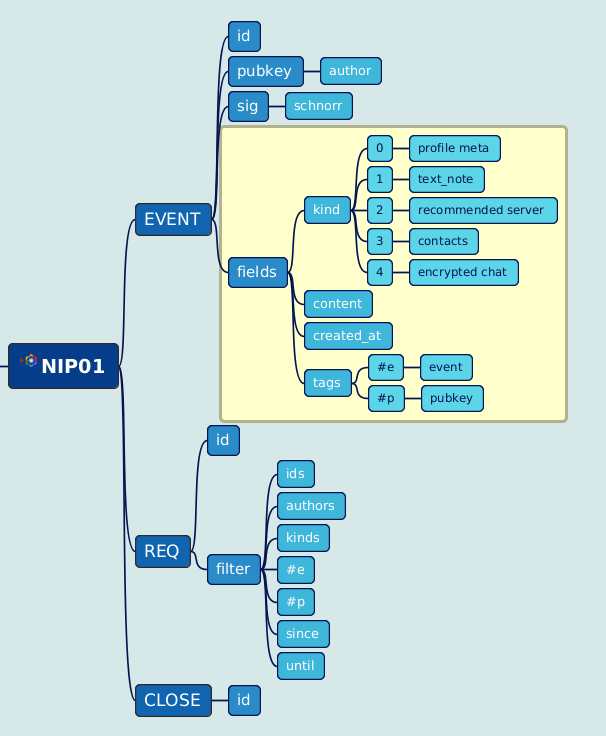
Every user is identified by a public key. Every post is signed to confirm is validity which every client checks against. Clients fetch data from relays of their choice and publish data to relays of their choice. Relays communicate only directly to users. Follow another Nostr user possible by entering their public key, it then checks with the relays to fetch any updates.

Bisonrelay
A social network built on top of Decred Lightning Network. It is suprisingly similar in functionality to Discord. They have integrated a $DCR tipping system named 'Oprah' to incentivise newsletters and regular posts. It is quite nice to see a privacy conscious social network/messenger with native crypto support. Because it is built on top of an LN, it also becomes possible to extend the network through other means of communication as demonstrated by Global mesh labs in an earlier article.

We have started up an Unofficial Zcash Chat, if you would like to join let me know. I will guide you through the process!
Berty
An open-source mobile messenger built on IPFS. Messages can be exchanged between two peers using proximity transport (BLE, MultiPeer Connectivity, or Android Nearby).

The project is still fairly new. Eventually it may allow for a new form of social networks, occuring off the internet, primarily within a local area but also enable these local groups to join online communities.
Final Points
Today the powers that be have realised they are unable to prevent communities forming online. Communities composed of people looking to find solutions to the economic disparity, societal disarray and corruption corporations depend on to function.
Efforts therefore shifted to reinforcing formation of "in-groups" and pitting groups against another. Divide & Conquer.
Decentralised social networks present an opportunity to reimagine the way we interact with each other, building networks that bring us closer together by rewarding agreement across communities instead of penalizing it. In another article I mentioned how crypto incentives are leading to growth of new physical network infrastructure. It may also apply to social infrastructures as well, it remains to be seen. Support your decentralised social network!
Thanks for reading!