
During Hugo Chávez's presidency in Venezuela, the national oil industry, represented by PDVSA, underwent a tumultuous period marked by massive layoffs and significant political events. These events not only deeply altered the economic and social landscape of the country but also left an indelible mark on Venezuelan society itself.
Layoffs at PDVSA and Their Consequences
One of the most prominent chapters during Chávez's government was the 2002-2003 "oil strike," a labor conflict that led to the dismissal of over 18,000 PDVSA employees. Accused of participating in an attempted overthrow of the government, these layoffs not only affected individuals but also triggered a massive loss of talent and technical expertise within the Venezuelan oil industry.
The immediate impact was reflected in PDVSA's operational and maintenance capacity, with a significant decrease in oil production and long-term effects on the country's oil infrastructure. This measure contributed to a prolonged crisis in the sector, exacerbating management and maintenance issues that persist to this day.
April 11th Events and Social Polarization
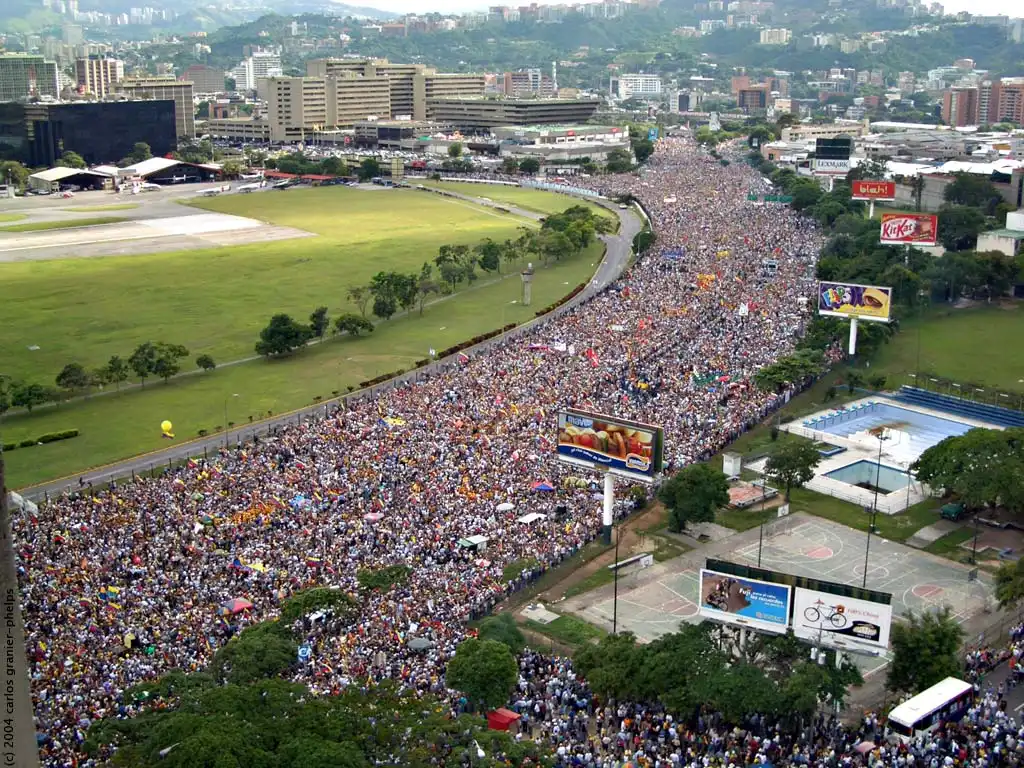
On April 11, 2002, Venezuela witnessed a tumultuous day with massive demonstrations both for and against Chávez's government. These events culminated in the temporary removal of the president, followed by his reinstatement to power. This episode not only heightened political divisions but also intensified social polarization in the country.
Political polarization manifested in persistent tensions between government supporters and the opposition, marking a turning point in Venezuelan political dynamics. These events undermined public trust and laid the groundwork for deeper social and economic conflicts in the following years.
Impact on Venezuelan Communities and Families
Policies of forced relocation and expropriation implemented during Chávez's government affected numerous families in key cities such as Punto Fijo, Barcelona, Lechería, Lagunillas, Bachaquero, Tamare, Tía Juana, Ciudad Ojeda, and Cabimas. These measures, designed in some cases for development projects and in others for controversial governmental decisions, displaced entire families from their homes, generating additional tensions and resentments within the affected population.
This context of displacement and social segregation intensified political and social divisions in Venezuela, exacerbating tensions and conflicts within society. The resulting dynamics contributed to a persistent atmosphere of polarization that shaped Venezuelan politics in the decades that followed.
Political Segregation and Repression During Chávez's Regime
During his tenure, Hugo Chávez implemented policies that restricted the political and economic participation of those who did not support his government. These policies included legislative changes that consolidated his political power, as well as repressive measures against political opposition and freedom of expression. This dynamic of political segregation exacerbated social and political divisions in Venezuelan society, fostering a climate of confrontation and mistrust among opposing ideological groups.
Electoral Fraud and Legitimacy Crisis
During Chávez's and his successor Nicolás Maduro's governments, Venezuela has faced recurring accusations of irregularities and fraud in electoral processes. Presidential and parliamentary elections have been subject to controversy, with reports of result manipulation, voter intimidation, and institutional control favoring the ruling party.
These incidents have contributed to a legitimacy crisis in Venezuela's electoral system, undermining public trust in the democratic process and exacerbating political divisions in the country. The lack of transparency and perceived impartiality have fueled additional tensions between government supporters and the opposition, further complicating efforts to find consensus solutions to national problems.
Danilo Anderson Case and Judicial Persecution
Danilo Anderson, a Venezuelan prosecutor known for investigating corruption and terrorism cases, was assassinated in November 2004 under circumstances that remain unclear. His death led to intensified judicial persecution against alleged suspects, some of whom were accused and convicted in trials widely criticized by human rights organizations and international observers.
The Danilo Anderson case underscored concerns about the state of justice and respect for human rights in Venezuela during that period, further inflaming political and social tensions within the country.
Economic and Financial Impact: Inflation, Dollarization, and Parallel Market
In addition to structural problems at PDVSA and internal political tensions, Venezuela faced significant economic challenges. Inflation soared, exacerbated by controversial monetary and fiscal policies. The growing dependence on oil as the main source of income left the economy vulnerable to fluctuations in international oil prices.
The emergence of a parallel currency market, where the US dollar became a de facto currency due to strict exchange controls, further fragmented the economic system. This led to significant disparities between official and unofficial exchange rates, further complicating the country's economic and financial stability.
Exodus of Over 8 Million Venezuelans
Since the mid-2010s, Venezuela has experienced a massive migration of its citizens due to economic, political, and social crises. Over 8 million Venezuelans have emigrated in search of better living conditions, fleeing from food and medicine shortages, widespread violence, and lack of economic opportunities. This exodus has had a significant impact on recipient countries in the region and has generated a dispersed Venezuelan diaspora worldwide.
These events definitely marked what was to be a tragic period of profound socioeconomic, political and financial changes, the consequences of which continue to shape the country's reality today.
REMEMBER... We need your support to continue uncovering the reality behind the dictatorship in Venezuela. Every donation helps us keep the light of information alive, challenge censorship, and fight for justice. Join us in this digital battle for freedom. Your contribution matters. Donate now so that our voice will not be silenced.