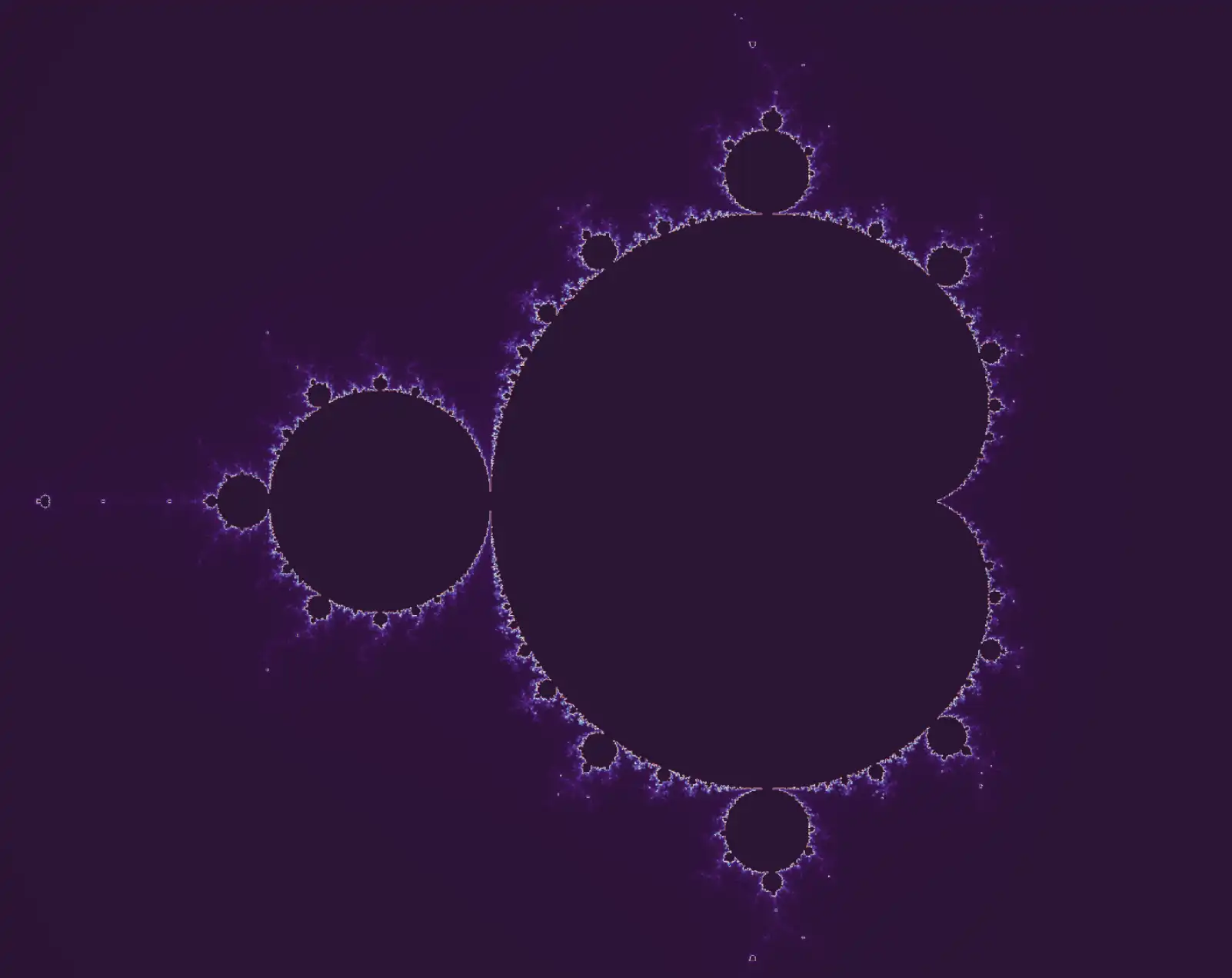

Numbers are the foundation of mathematics, but not all numbers are as straightforward as counting numbers. One of the most fascinating branches of mathematics is the study of complex and imaginary numbers, which extends our understanding beyond the real number system.
But where did these numbers come from? Why do they exist, and what purpose do they serve in mathematics and science? Let’s explore the history, applications, and significance of complex numbers.
1. The Origins of Imaginary Numbers
The concept of imaginary numbers arose from a very simple but perplexing problem: finding the square root of a negative number.
In the 16th century, Italian mathematicians such as Gerolamo Cardano (1501–1576) and Rafael Bombelli (1526–1572) encountered equations that required taking the square root of negative numbers. At the time, such numbers were thought to be meaningless, as no real number squared could produce a negative value.
Cardano, in his book Ars Magna (1545), formally introduced the use of these numbers while solving cubic equations, though he was skeptical of their validity. Bombelli, however, took a more systematic approach, recognizing their utility in solving certain polynomial equations.
2. What Are Imaginary and Complex Numbers?
Imaginary Numbers
An imaginary number is defined as a multiple of the unit imaginary number, denoted as i, where:
This allows us to express the square root of a negative number:
For example:
Complex Numbers
A complex number consists of both a real and an imaginary component and is written in the form:
where:
- is the real part
- is the imaginary part
- is the imaginary unit
For example, is a complex number with a real part of 3 and an imaginary part of 4.
3. The Complex Plane and Representation
Unlike real numbers, which exist on a one-dimensional number line, complex numbers are best represented in a two-dimensional plane, called the complex plane or Argand plane.
- The x-axis represents the real part.
- The y-axis represents the imaginary part.
A complex number is represented as the point in this plane.
Additionally, complex numbers can be expressed in polar form:
where:
- is the modulus (or magnitude) of the complex number.
- is the argument (angle).
This leads to the Euler's formula:
which provides a powerful way to work with complex numbers in exponential form:
4. Why Are Complex Numbers Useful?
Though they started as mathematical curiosities, complex numbers have become essential in various fields:
Engineering and Electrical Circuits
In electrical engineering, complex numbers are used to analyze AC circuits. Impedance, voltage, and current are often expressed as complex numbers:
where is resistance and is reactance.
Quantum Mechanics
Quantum states and wave functions are represented using complex numbers. Schrödinger's equation, a fundamental equation in quantum mechanics, relies on complex functions:
where is the wave function, and is the Hamiltonian operator.
Signal Processing
Fourier transforms, which decompose signals into their frequency components, heavily depend on complex numbers. The Fourier transform of a function is given by:
This is crucial in image processing, audio analysis, and communications.
Fluid Dynamics and Aerodynamics
Complex analysis simplifies solving potential flow problems in fluid mechanics. The conformal mapping technique is used to model airflow over airfoils.
Control Systems and Stability Analysis
Control theory uses the Laplace transform, which involves complex functions, to analyze system stability. The poles of a transfer function in the complex plane determine system behavior.
5. How Are Complex Numbers Possible?
Mathematically, complex numbers exist because they are consistent with the fundamental rules of algebra. They extend the real number system in a way that allows for the solutions of all polynomial equations (as per the Fundamental Theorem of Algebra):
This makes complex numbers not only possible but necessary for a complete number system.
Physically, while direct interpretations of imaginary numbers can be challenging, they emerge naturally in equations governing real-world phenomena, proving their necessity.
6. Conclusion
What started as a mathematical curiosity evolved into one of the most powerful tools in mathematics, physics, and engineering. Complex numbers allow us to solve equations that would otherwise have no real solution, and they underpin some of the most advanced theories in modern science.
From quantum mechanics to electrical engineering, from fluid dynamics to signal processing, complex numbers are an indispensable part of the mathematical universe.
Far from being "imaginary," they are one of the most real and fundamental discoveries in mathematics.
import numpy as npimport matplotlib.pyplot as plt # Mandelbrot function to compute fractal valuesdef mandelbrot(c, max_iter): z = np.zeros_like(c, dtype=np.complex128) div_time = np.full(c.shape, max_iter, dtype=int) for i in range(max_iter): mask = np.abs(z) <= 2 z[mask] = z[mask]**2 + c[mask] div_time[mask & (np.abs(z) > 2)] = i return div_time # Set image resolution and boundswidth, height = 1000, 1000xmin, xmax, ymin, ymax = -2.0, 1.0, -1.5, 1.5max_iter = 500 # Generate complex plane gridx = np.linspace(xmin, xmax, width)y = np.linspace(ymin, ymax, height)X, Y = np.meshgrid(x, y)C = X + 1j * Y # Compute the Mandelbrot setmandelbrot_set = mandelbrot(C, max_iter) # Create artistic visualizationplt.figure(figsize=(10, 10))plt.imshow(mandelbrot_set, cmap='twilight_shifted', extent=(xmin, xmax, ymin, ymax))plt.axis('off') # Hide axes for aesthetics # Save and display the fractalplt.show()