
Are you tired of the same old, boring number line lessons? Well, shake things up with this quirky take on the classic math concept! You may have been taught that the larger numbers go towards the right and the smaller numbers go towards the left, but did you know that this is just a matter of convention? That's right, the dominant pedagogy may have you believing that this is the only way to organize numbers on a line, but there's so much more to discover. Keep reading to see how you can add some whimsy to your number line practice and break free from the chains of the dominant math narrative.
- ChatGPT 😆
Number lines are drilled in grade school.
Numbers to the right are "greater than"
numbers to the left.
Note that the numbers
to the right are not necessarily
"bigger" than the numbers
to the left. 🤔
Greater towards the right, lesser towards the left.
Rarely does the dominant pedagogy tickle the imagination by letting the
young student know that this is an arbitrary choice.
Let's make the humble number line exciting!
What are numbers?
Before we look at a number line, let's review
the essence of what numbers are.
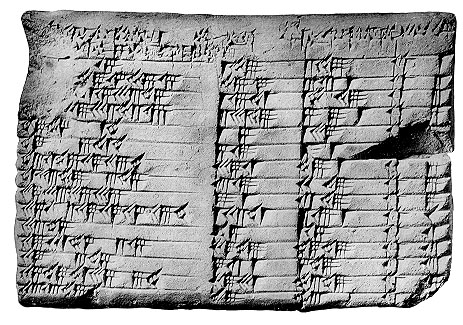
Numbers are used to represent quantities and to perform calculations. The most basic numbers are the positive integers, also known as the counting numbers or natural numbers. These are the numbers {1, 2, 3, ...} that are used for counting. Negative numbers, which include negative integers such as -1, -2, -3, and so on, as well as negative fractions and decimals, are used to represent quantities that are less than zero. Zero, which was first discovered by the ancient Egyptians and Babylonians, is used to represent the absence of a quantity. It is also the starting point for both positive and negative numbers on the number line.
What is zero?
Zero is a number that represents the absence of a quantity. It is the starting point for both positive and negative numbers on the number line, and it is used as a placeholder in many numbering systems. In arithmetic, zero is also an important number that has special properties, such as the fact that any number multiplied by zero is equal to zero.
Multiplicative property of zero
The multiplicative property of zero states that any number multiplied by zero is equal to zero. This is because any number, no matter how large or small, when multiplied by zero, will always result in a product of zero.
"A million zero times is still zero". This property holds true for both positive and negative numbers, as well as for fractions and decimals. The multiplicative property of zero is a fundamental concept in mathematics and is used in a variety of mathematical operations and applications.
Additive identity property of Zero
The additive identity property of zero states that for any number, adding zero to that number will result in the same number. This property holds true for all real numbers, including positive and negative numbers, fractions, and decimals. The additive identity property is a fundamental concept in mathematics and is used in a variety of mathematical operations and applications.
What are negative numbers?
A number can be negative when it represents a quantity that is less than zero. For example, if you have -5 apples, it means that you have a deficit of 5 apples, or that you owe 5 apples to someone. Similarly, if you have a temperature of -10 degrees, it means that the temperature is 10 degrees below the zero point on the temperature scale.
Here are a few other examples of situations where negative numbers can be used to represent quantities:
Altitude: If you are standing at an altitude of -100 meters, it means that you are 100 meters below sea level.
Bank balance: If you have a bank balance of -$100, it means that you owe the bank $100.
Distance: If you are driving 100 kilometers west and then 200 kilometers east, your total distance traveled would be -100 kilometers (because you moved in the opposite direction to what you started).
The number line is a visual representation of the set of real numbers, which includes all positive and negative numbers as well as zero. It allows us to compare numbers by using the concept of distance, and it forms the basis for many advanced mathematical concepts.
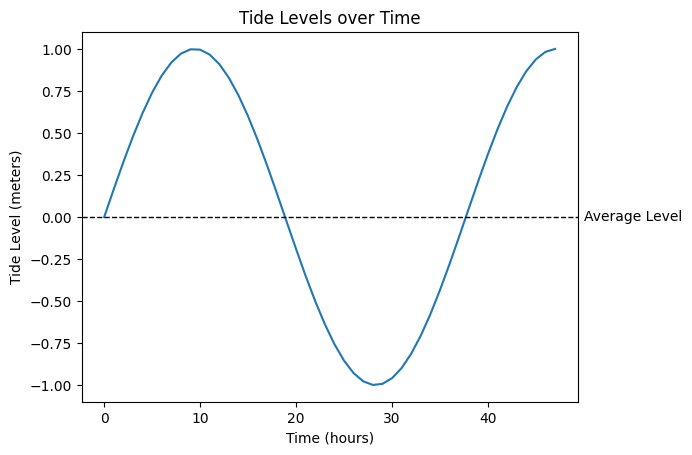
Think about the tides. Say the average level of the ocean is 0.
Then, at low tide, the level would be below 0 and at high tide,
the level will be above 0. Here time goes from left to right and the height of tides goes up and down.
The Number Line
One of the most basic uses of the number line is to represent the counting numbers, also known as the natural numbers. These are the positive integers {1, 2, 3, ...}. We can represent these numbers on the number line by placing a tick mark at each integer, with the numbers increasing as we move to the right.
The number line also includes the integers, which are the whole numbers including both positive and negative numbers {..., -3, -2, -1, 0, 1, 2, 3, ...}. We can represent these numbers on the number line by placing a tick mark at each integer, with the positive numbers to the right of zero and the negative numbers to the left.
This is probably the most basic number line that most people
are familiar with:

What is division?
Imagine that you have a pie that is divided into 2 equal slices. This means that the pie is cut into 2 pieces that are exactly the same size as each other. When we talk about "division," we mean that we are sharing a quantity equally among a certain number of people or parts.
Now, let's say that you want to share the pie with a friend. You could give your friend one of the slices, which would represent an equal share of the pie, and you would keep the other slice, which would also represent an equal share of the pie.
So, 1/2 represents a division of a quantity into 2 equal parts, or an equal share. It's like cutting something into 2 pieces and giving one of the pieces to someone else.
What are rational numbers?
A rational number is a number that can be expressed as the ratio of two integers. This includes both positive and negative numbers, as well as fractions and mixed numbers.
For example, the number 1.5 can be expressed as the ratio 3/2, which means 3 parts of a quantity that has been divided into 2 equal parts. Similarly, the number -0.25 can be expressed as the ratio -1/4, which means -1 part of a quantity that has been divided into 4 equal parts.
Fractions are a common type of rational number that represents a division of a quantity into equal parts. They are written using a slash (/) to separate the numerator (the number on top) from the denominator (the number on the bottom). For example, the fraction 3/4 represents 3 parts of a quantity that has been divided into 4 equal parts.
In general, any number that can be written as the ratio of two integers is a rational number. This includes both simple fractions like 1/2 and more complex fractions like 7/13, as well as mixed numbers like 1 3/4 and decimals like 0.375.
In addition to the counting numbers and the integers, the number line also includes the rational numbers, which are the numbers that can be expressed as a ratio of two integers. This includes both positive and negative numbers.
Here is a number line between -2 and 2 that has tick marks every 0.25 and labels every 0.5:

What are irrational numbers?
Finally, the number line also includes some numbers that cannot be expressed as a ratio of two integers, called irrational numbers. These numbers are often represented using an infinite decimal expansion, such as the number pi (3.14159...) or the square root of 2 (1.414213...).
For these irrational numbers, the decimal never repeats and never ends. There are actually more irrational numbers
than there are rational numbers! Maybe we can prove this some time! But, just know that there are numbers between the cracks of the rational numbers - even though the number of rationals between any 2 rational numbers is also infinite!
Infinity $\infty$
The concept of infinity is also an important part of the number line. Infinity is not a real number, but it can be thought of as a point on the number line that is infinitely far away in either the positive or negative direction. This allows us to talk about things like limits, which are used to describe how a function behaves as it approaches a certain point on the number line.