I was helping my kid with an assignment for his history class. We needed to write a few sentences about how bad working conditions were in the late 1800s in Washington State - the poor conditions that necessitated the reforms of "The Progressive Era" in the United States. I decided to read the unit myself to help with the task.
$1 a day
A sentence immediately caught my eye:
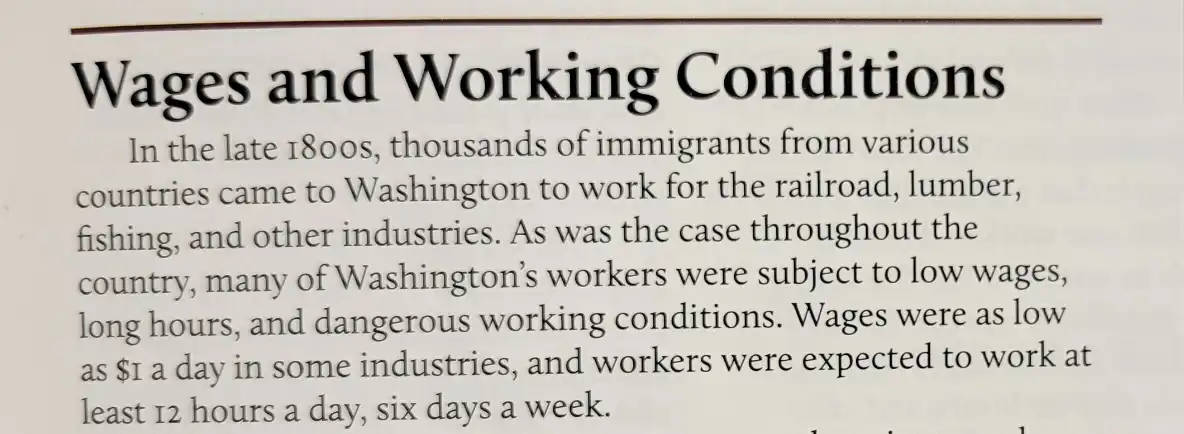
"wages were as low as $1 a day in some industries"
My first thoughts were, "wow! they don't give any context about the history of the US Dollar? The history of money? The definition of inflation? A comparison between the cost of living at the time and the cost of living now?" I thought that these topics must be touched on somewhere. But, apparently, there is no mention of any of this in the book or anywhere else in the curriculum. It seems there is no mention whatsoever of the gold standard, the federal reserve, or inflation at all in the entire book.
What was a dollar in 1880 Washington State? Well, one dollar was redeemable for 1.505 grams of gold in 1880 in the United States.
# Constantgrams_per_ounce = 31.1035 # grams per troy ounce # 1880dollars_per_ounce_1880 = 20.67 # USD per troy ounce of goldgrams_per_dollar_1880 = grams_per_ounce / dollars_per_ounce# 1.505 grams of gold for $1 in 1880 # 2024dollars_per_gram_2024 = 70dollars_per_gram_2024 * grams_per_dollar_1880# $105.35 for 1.505 grams of gold todayBased on the price of gold in 1880 and the price of gold today, this "$1 a day" translates to $105.35! "Wages were as low as $105.35 a day in some industries" doesn't have the same ring to it. According to a quick search, skilled laborers would often earn $4 a day. Assuming this is a true, based on the price of gold, many people were earning the equivalent of $420.40 a day (aka $4 a day).
In the late 1880s, thousands of immigrants from various countries came to Washington to work ... many of Washington's workers were subject to low wages ... as low as $1 a day ...
Through the lens of my own biases, this passage is an outright contradiction. People came from all over the world because wages were low? The truth is that the late 1800s on the west coast of the United States was one of the biggest economic booms in the history of the world. A skilled carpenter could apparently earn $0.32 per hour which translates to about $35/hour, over $100,000 per year in today's dollars (working 250 days a year). It's worth noting that there was no income tax. No wonder people were coming from all over the world! People were free to accumulate wealth with their hands. There was fishing, mining, timber, railroads. Fortunes were being made in diverse ways.
At best, this "$1 a day" passage is just extremely dumbed-down history. Maybe the people who wrote the book are just stupid? I decided to look at the entire book and I've come to the conclusion that it's much worse than simple stupidity. This passage is but one instance of systematic disinformation in the history curriculum that is intended to misinform (maybe we will continue in further episodes).
The biggest holes in the book's timelines are due to the fact that the history of money is completely omitted. Let's provide a brief overview.
Timeline of the US Dollar
Here is a quick timeline of the US dollar mostly written by GPT4 with some edits by me:
- 1775: Continental Congress issues Continental Currency to finance the Revolutionary War. The currency quickly depreciates.
- 1792: Coinage Act establishes the US dollar at a fixed rate of silver (371.25 grains of pure silver) and gold (24.75 grains of pure gold), essentially introducing bimetallism. 1 dollar is fixed to 1.6 grams of gold which today would cost about $112.
- 1791: First Bank of the United States chartered to issue banknotes and manage government finances.
- 1836-1862: Free Banking Era; state banks issue their own banknotes without federal regulation.
- 1862: Legal Tender Act; introduces "greenbacks," paper money not backed by gold or silver, initially worth less than gold coins.
- 1873: Coinage Act ends the minting of silver dollars and establishes a de facto gold standard; $1 = 1.505 grams of gold.
- 1878: Bland-Allison Act reintroduces silver coinage but maintains gold standard dominance.
- 1900: Gold Standard Act definitively places the US on a gold standard; $1 = 1.505 grams of gold.
- 1913: Federal Reserve Act establishes the Federal Reserve System.
- 1913: The Revenue Act of 1913 imposed a 1% tax on net personal incomes above $3,000. Average income was $500-$800 per year.
- 1929: Stock market crash, bank runs, bank failures, beginning of the Great Depression.
- 1933: Executive Order 6102 requires Americans to exchange gold coins, bullion, and certificates for $20.67 per ounce; ends gold standard domestically.
- 1934: Gold Reserve Act revalues gold to $35 per ounce; prohibits private gold ownership, expanding money supply.
- 1944: Bretton Woods Agreement establishes USD as the world reserve currency, fixed to gold at $35 per ounce.
- 1971: Nixon ends Bretton Woods system, ending gold convertibility and leading to fiat currency.
- 1974: Private gold ownership legalized again in the U.S.
- 1980: Monetary Control Act expands the Federal Reserve's regulatory authority.
- 1981-1982: Federal Reserve Chairman Paul Volcker combats stagflation with high interest rates, peaking over 20%.
Getting GPT4 to give you an honest account of the history of money is challenging because GPT4 has been trained on garbage like the present textbook and the conventional history. But, just based on the facts, there are some interesting things to look at. The Federal Reserve was created to provide stability and 16 years later the greatest economic collapse in history ensued. I wonder what the conventional center-left aligned GPT would have to say about that?
Why was The Federal Reserve created?
The Federal Reserve System was established in 1913 with the passage of the Federal Reserve Act, largely in response to a series of financial panics, notably the Panic of 1907. The central aim was to create a stable and flexible monetary and financial system for the United States. The establishment of the Federal Reserve sought to provide a safer, more flexible, and more stable monetary and financial system. It was designed to address the lack of a central bank, which left the U.S. economy vulnerable to banking crises and to facilitate a more elastic currency that could meet the changing needs of the economy. The Federal Reserve was tasked with several key functions, including managing the nation's money supply, serving as a lender of last resort to prevent bank runs, and providing a more efficient and safer banking system through regulation and supervision of banks. This effort to mitigate financial instability and promote economic growth marked a significant evolution in American monetary policy.
- GPT4
The crash of 1929 and the great depression was largely caused by bank runs? Does this have anything to do with fractional reserve lending and the fact that the banks didn't have the money they were supposed to have?
The Crash of 1929 and the subsequent Great Depression were indeed complex events influenced by a multitude of factors, including bank runs and fractional reserve banking. Fractional reserve lending is a banking system in which banks keep a fraction of deposits as reserves and use the rest for loans or investments. This practice can amplify economic cycles due to its impact on the money supply.
During the 1920s, an era of economic expansion and speculative investment led to an inflated stock market. When the market crashed in October 1929, it eroded public confidence in the financial system. Many people, fearing for their savings, rushed to withdraw their deposits, leading to bank runs. Since banks operate on the principle of fractional reserve banking, they did not have all depositors' money on hand. This system works well under normal conditions but can lead to problems if many depositors try to withdraw their money simultaneously.
The widespread bank runs during the early 1930s exposed the vulnerability of the banking system and led to numerous bank failures. This, in turn, contracted the money supply, since banks play a crucial role in creating money through lending. The contraction of the money supply exacerbated the economic downturn, leading to deflation, reduced consumer spending, and increased unemployment.
Thus, while the Crash of 1929 was the catalyst, the underlying structure of fractional reserve banking and the inability of the banks to meet withdrawal demands contributed significantly to the depth and severity of the Great Depression. The Federal Reserve's failure to adequately respond to the banking crises, by not providing sufficient liquidity to the banking system, further worsened the situation.
- GPT4
Take a close look at this sentence from GPT4 which accurately describes the conventional misunderstanding of the problem, "The Federal Reserve's failure to adequately respond to the banking crises, by not providing sufficient liquidity to the banking system, further worsened the situation."
We are programmed to understand that the Federal Reserve provided too much liquidity which caused a huge boom. But, then, when the market crashed and everyone lost faith in the system, the Federal Reserve should have provided more and more liquidity (so that people could withdrawal fake dollars created out of thin air). The cause of the ailment is also the cure. The antidote to the poison is more poison. It's interesting that students are not invited to ponder that the exact problem that the central bank was formed to prevent manifested itself in the most dramatic way a short 16 years after the central bank was formed.
Another notable couple of facts on the timeline, which almost all Americans are ignorant of, is the confiscation of gold at $20.67/ounce in 1933 and the immediate devaluation of the dollar to $35/ounce in 1934. According to a brief search, 85,681,615 ounces were confiscated, which at today's prices would be worth about $186 billion. But, at the prices that those ounces were confiscated at, it would only be $1.7 billion. So, not so bad? GPT4 and the history books it was trained on will tell us that this was a good and noble thing that helped solve the Great Depression.
The order effectively transferred a substantial amount of gold from private hands to government control, helping to stabilize the banking system and allowing the Federal Reserve to increase the money supply.
- GPT4 (parroting the official history)
Not only are students not invited to ponder these facts, these facts are not presented to them at all. Instead, we hear about how miserable things were in the late 1800s where people could earn "as little as $1 a day in some industries." Students are taught to consider "$1" as some constant like a law of physics.
American public school students are led into complete ignorance. People are taught to be dumb. They are not even given the relevant facts. This is why many won't think twice when they are told by politicians that the government will lower costs by increasing subsidies. The more money the government prints and gives away, the cheaper things will be. To an average public-school-educated American, this sounds fine. With no grounding in basic economics, why wouldn't it be? Remember how bad things were before government got involved? People were only earning as little $1 a day in some industries!
Logical Conclusion
What happens when we extend this stupidity to its logical conclusion? This year 22 states increased their minimum wage. "Progressives" love the idea of increasing wages. Doesn't it just give you a warm fuzzy feeling? Workers earning more ahh! Feels good, doesn't it? Why don't we do a lot more of that? Why not give people 5 times more? Longtime US representative Barbara Lee from California wants to do better than that, proposing to increase the US federal minimum wage from $7.25/hour to $50/hour. Think of how amazing that would be.
Well, let's look at another extreme case. Venezuela just increased it's minimum wage by more than 40%. Surely this will be a great thing for workers!? But, doesn't Venezuela increase it's minimum wage almost every year? Sometimes multiple times a year?
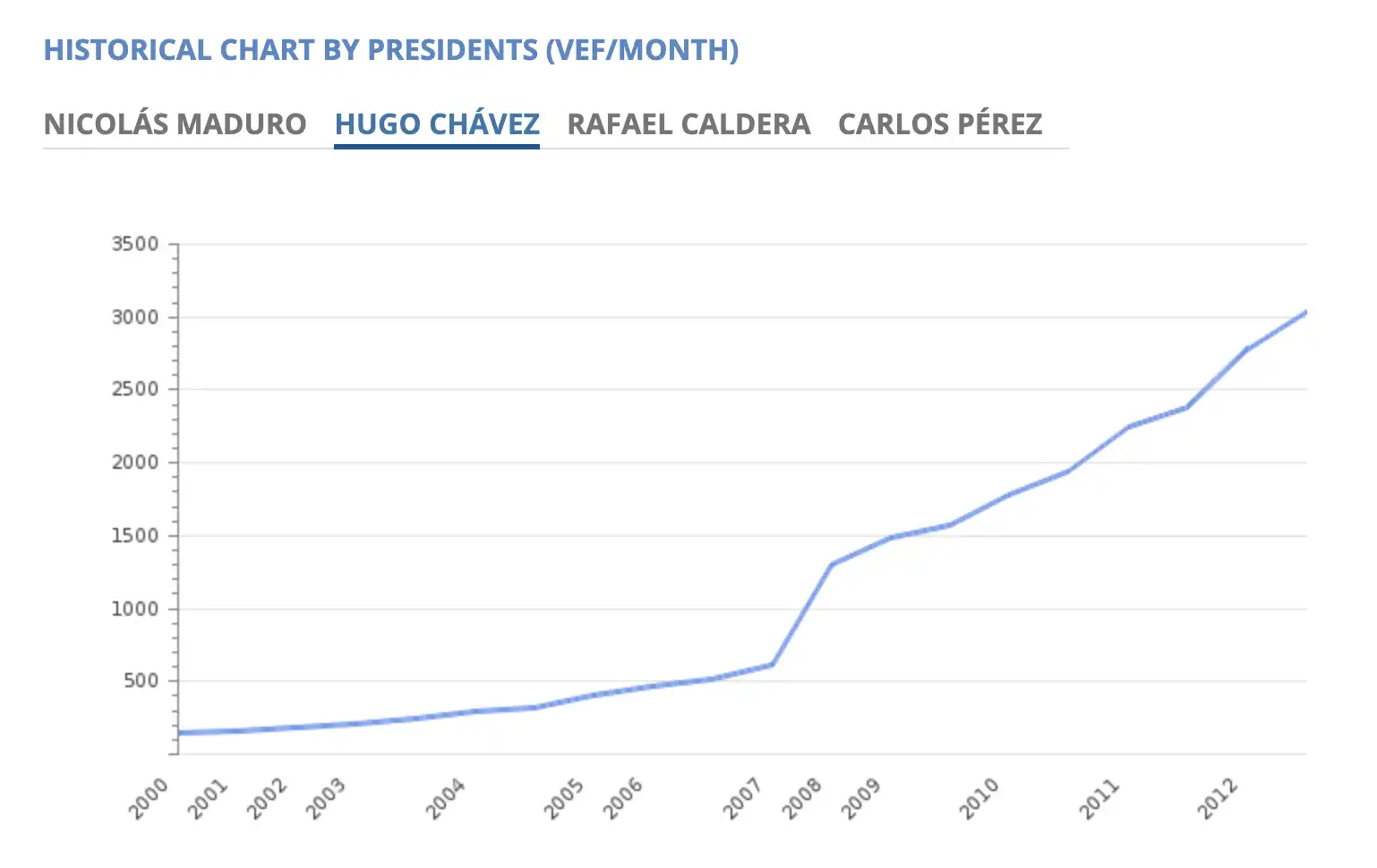
The minimum wage increased from 144 VEF/month to 3037.52 VEF/month from around 2000 to 2012. That's over 2000%! Nice! And what is the minimum wage in Venezuela today in VEF? I guess it's about 5.1 million VEF/month! That's a cool 142,882.15% increase in about 10 years! Boom!
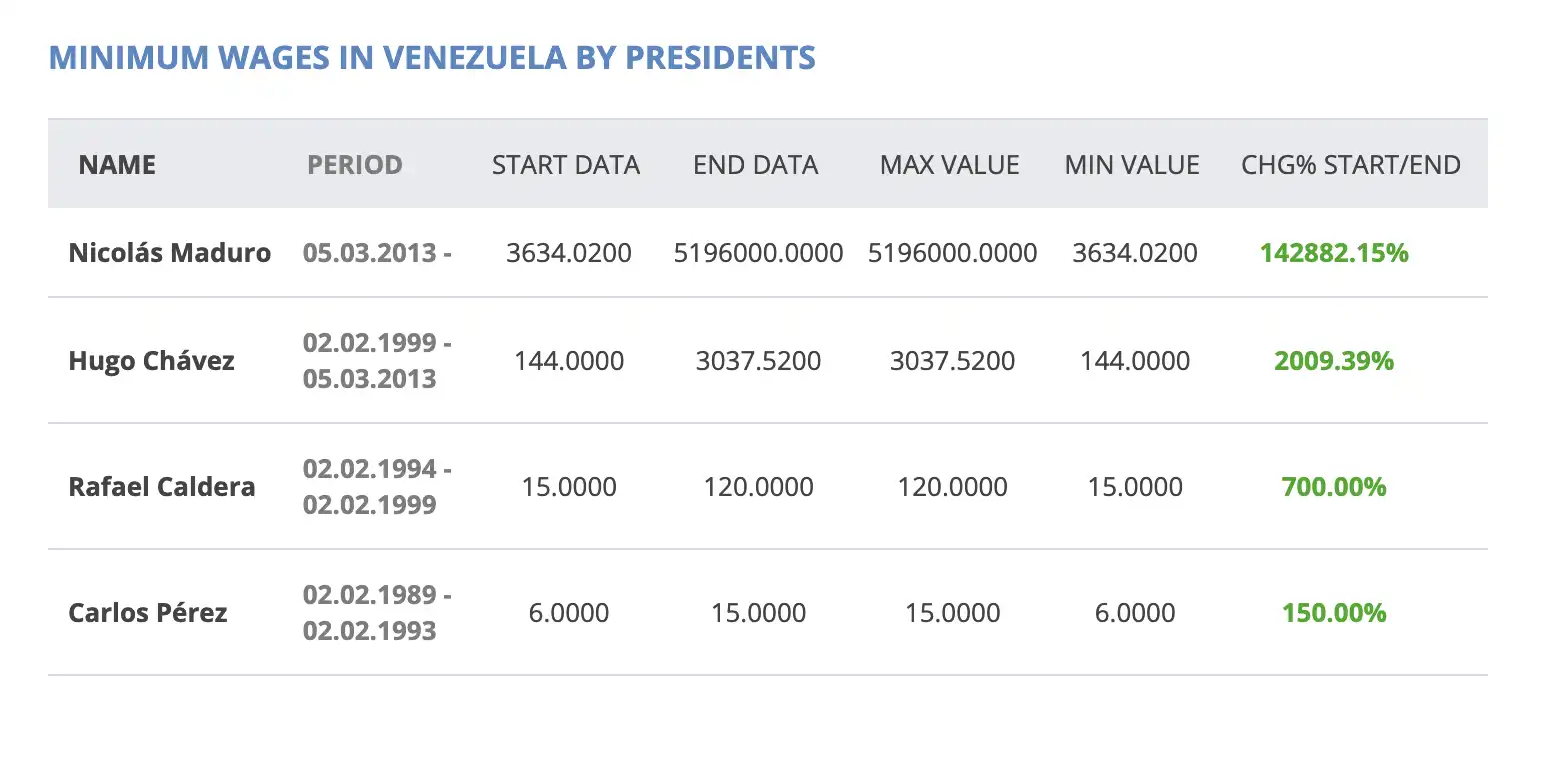
Note: these numbers and graphs aren't great because they aren't fully updated. I got them from here. If you want to keep up with the minimum wage in Venezuela, you need to be on point. One year it was raised 8 times? Venezuela switched from VEF to VES a few years ago, essentially turning 100,000 VEF into 1 VES. The minimum wage was 130 VES a month last year before the recent hike. So, in the original VEF, I think the minimum wage is closer to about 18,000,000 VEF/month now ... ergh ... but, bad news, that's only about $5 per month! Yes, that's right.
Let's not pick on Venezuela. Venezuela is unique. But, I think it dramatically illustrates a point. Workers should not demand increases to wages in nominal terms, they should demand a stable currency and seek an increase in purchasing power. Minimum wage could increase from $7.25 per hour to $100 per hour and people could be wealthy at $7.25 and starving at $100. Without an understanding of basic economics and a definition of what a dollar is, the nominal term says nothing.
Unfortunately, the idea of increasing the minimum wage is very popular in the United States with over half supporting doubling of the minimum wage in a 2019 poll
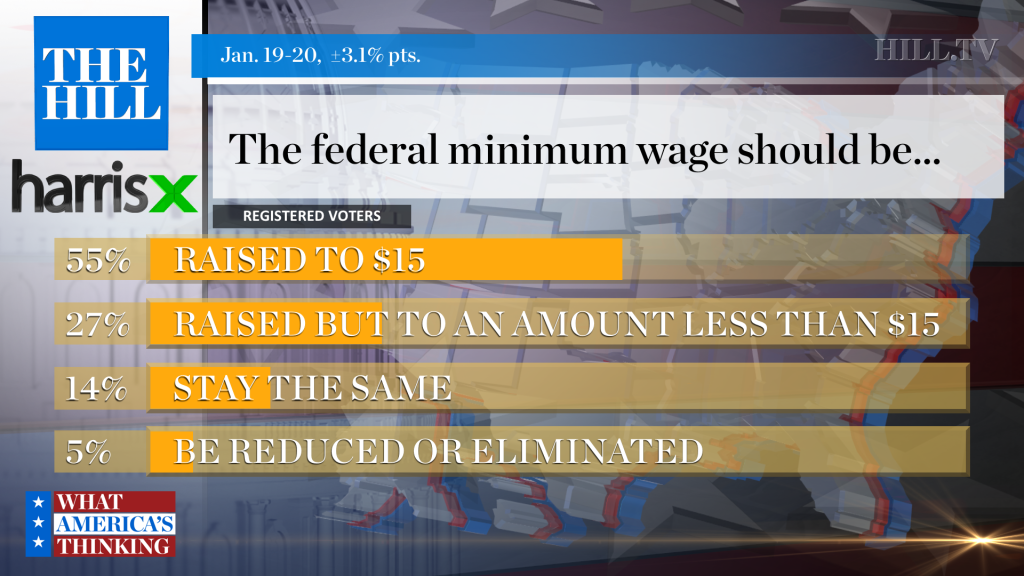
The correct answer is that the minimum wage should be abolished. Why are so many people wrong? Because they are miseducated by the same government that owns them. It seems that the purpose of history class in US public schools is to create morons. If we don't get more people educated, we will be further ruled by morons. Don't be a moron! Think critically, understand the history of money, and reject communist bullshit!
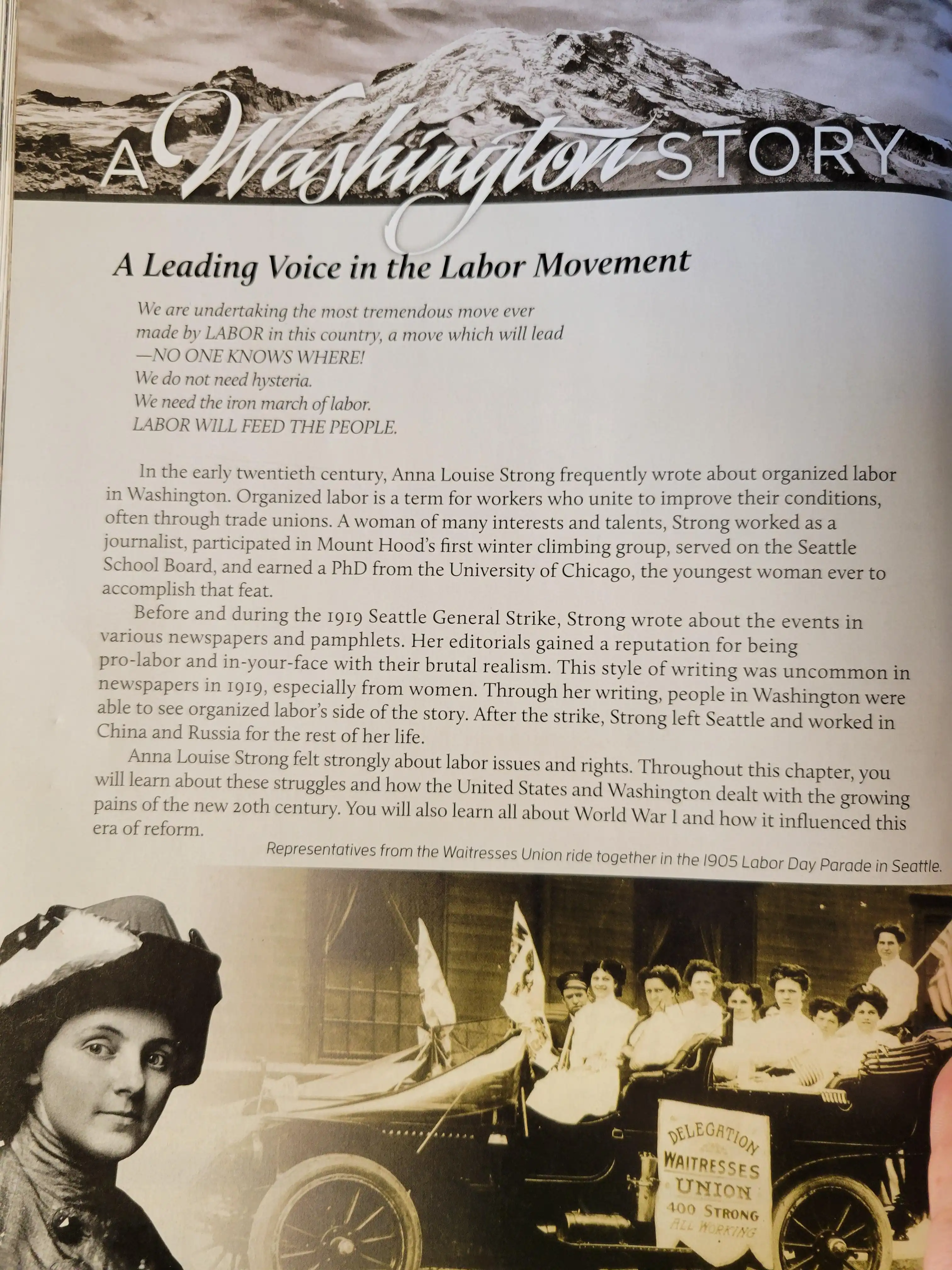
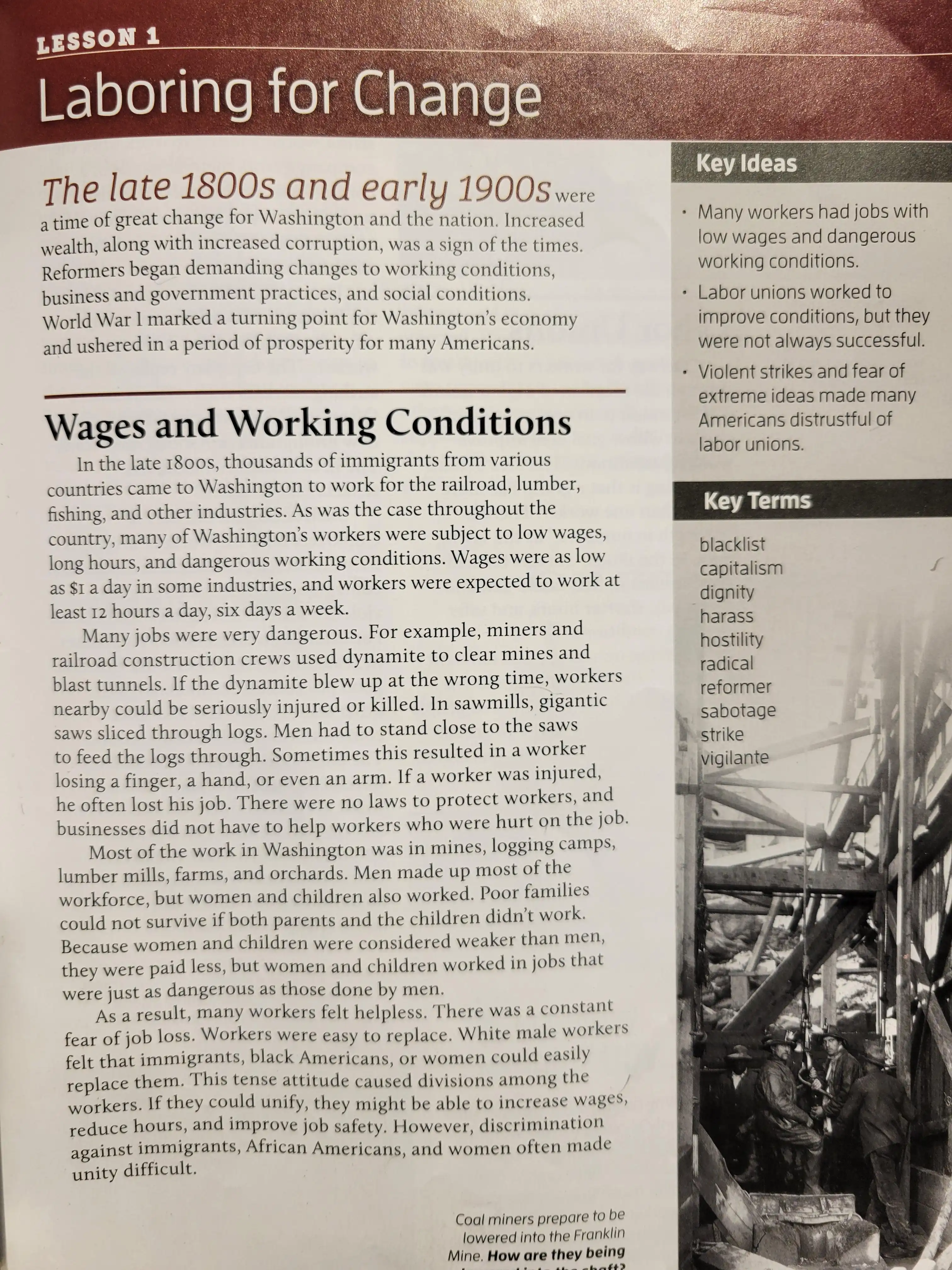
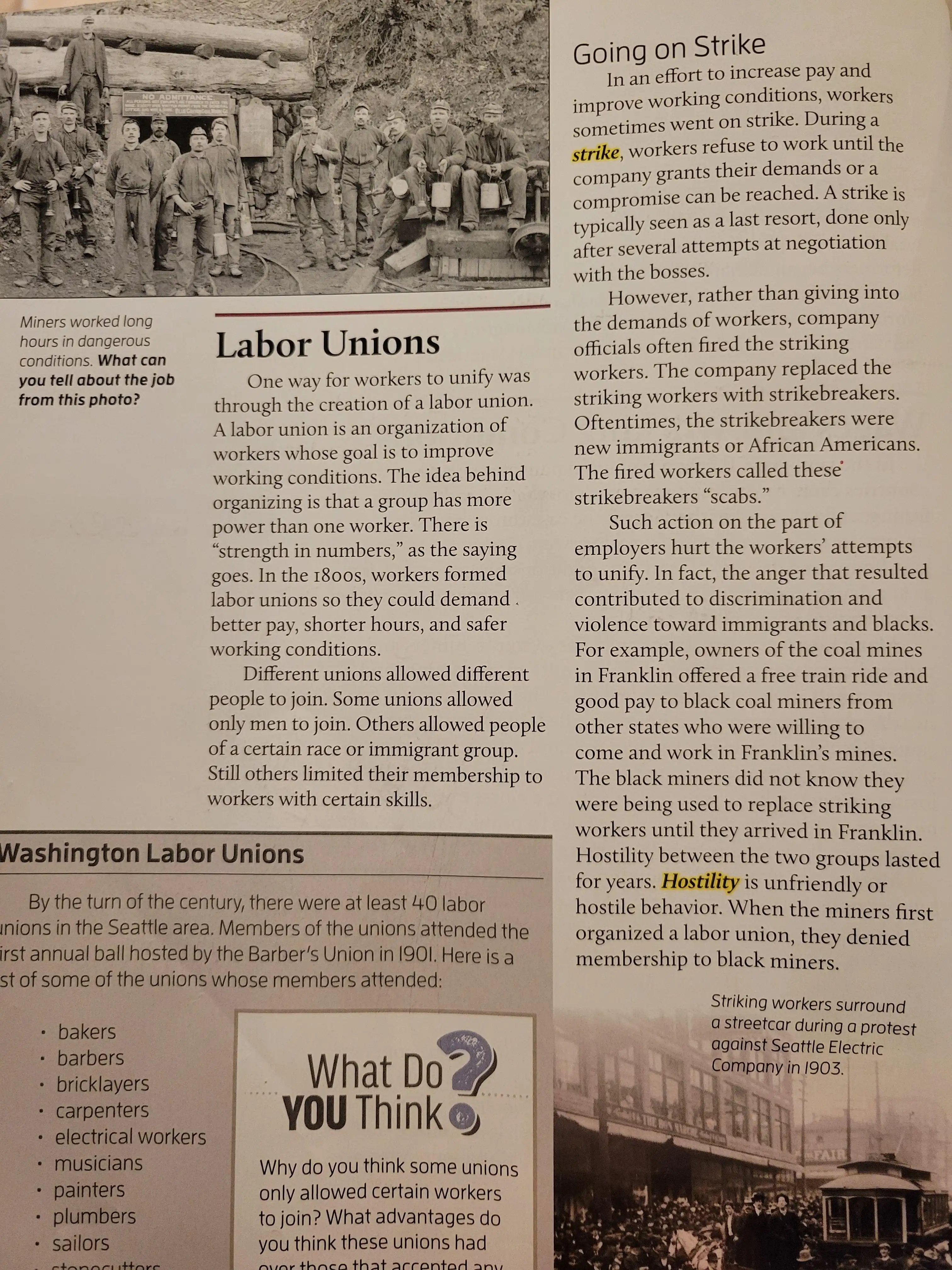
Here are the first 3 pages of the unit on the Progressive Era. What contradictions, propaganda, and misinformation can you spot? Do you think this text is appropriate for middle school students in the US?